
How a House Slab Gets Built — Stage by Stage
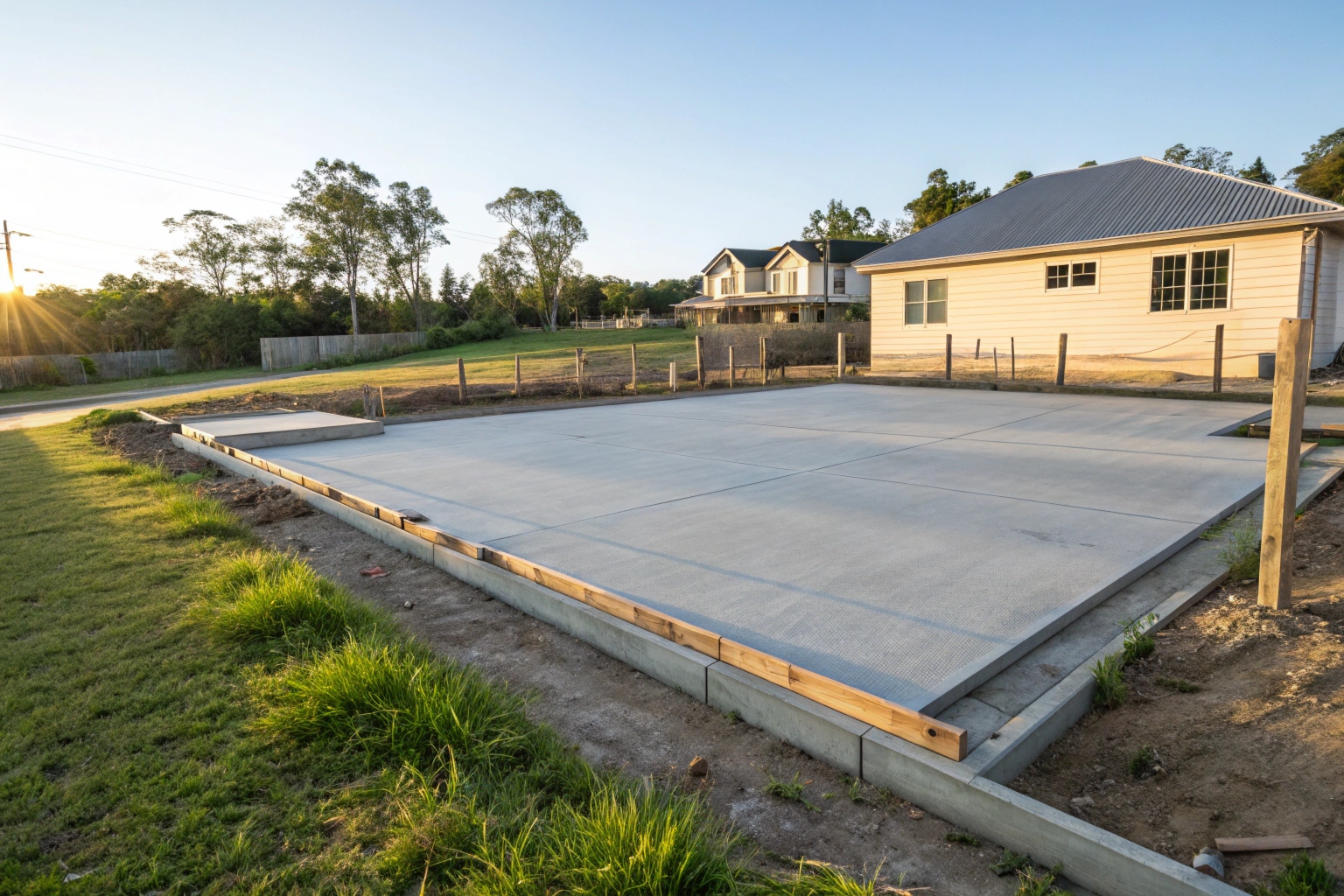
A house slab isn’t one job. It’s a sequence of jobs, and each one depends on the one before it being done correctly. Here’s how the process works from start to finish.
Site Classification and Geotechnical Assessment Before anything gets designed or quoted, the site needs to be classified. Soil testing determines how reactive the ground is and what engineering solution is required.
Engineer Design to AS 2870 The classification result goes to a structural engineer who designs the slab to Australian Standard AS 2870. That design dictates everything — beam depths, reinforcement schedules, concrete strength, and slab type.
Site Preparation and Excavation The site gets cut and shaped to the correct levels. Any soft spots, fill material, or unstable ground gets addressed at this stage — not after the pour.
Sub-Base Compaction A properly compacted sub-base is what the slab sits on. This step gets rushed on a lot of sites, and it shows years later when slabs start to move.
Termite Barrier Installation Required by Queensland building code before the slab goes down. Not optional, and the certifier will check it.
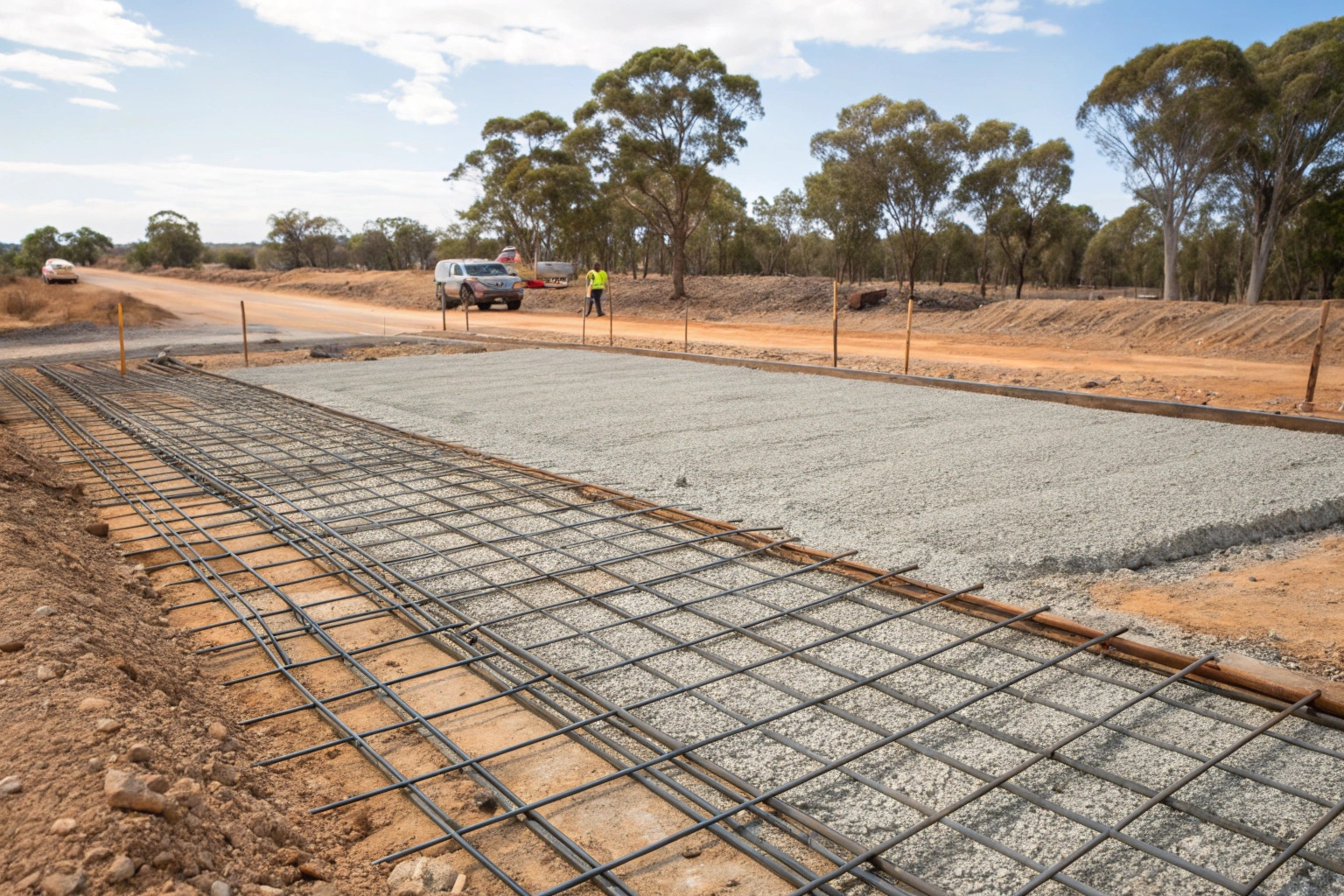
Formwork, Reinforcement, and Steel Placement Steel is placed to the exact schedule specified by the engineer. This is a mandatory inspection hold point — the certifier must approve reinforcement before any concrete is placed.
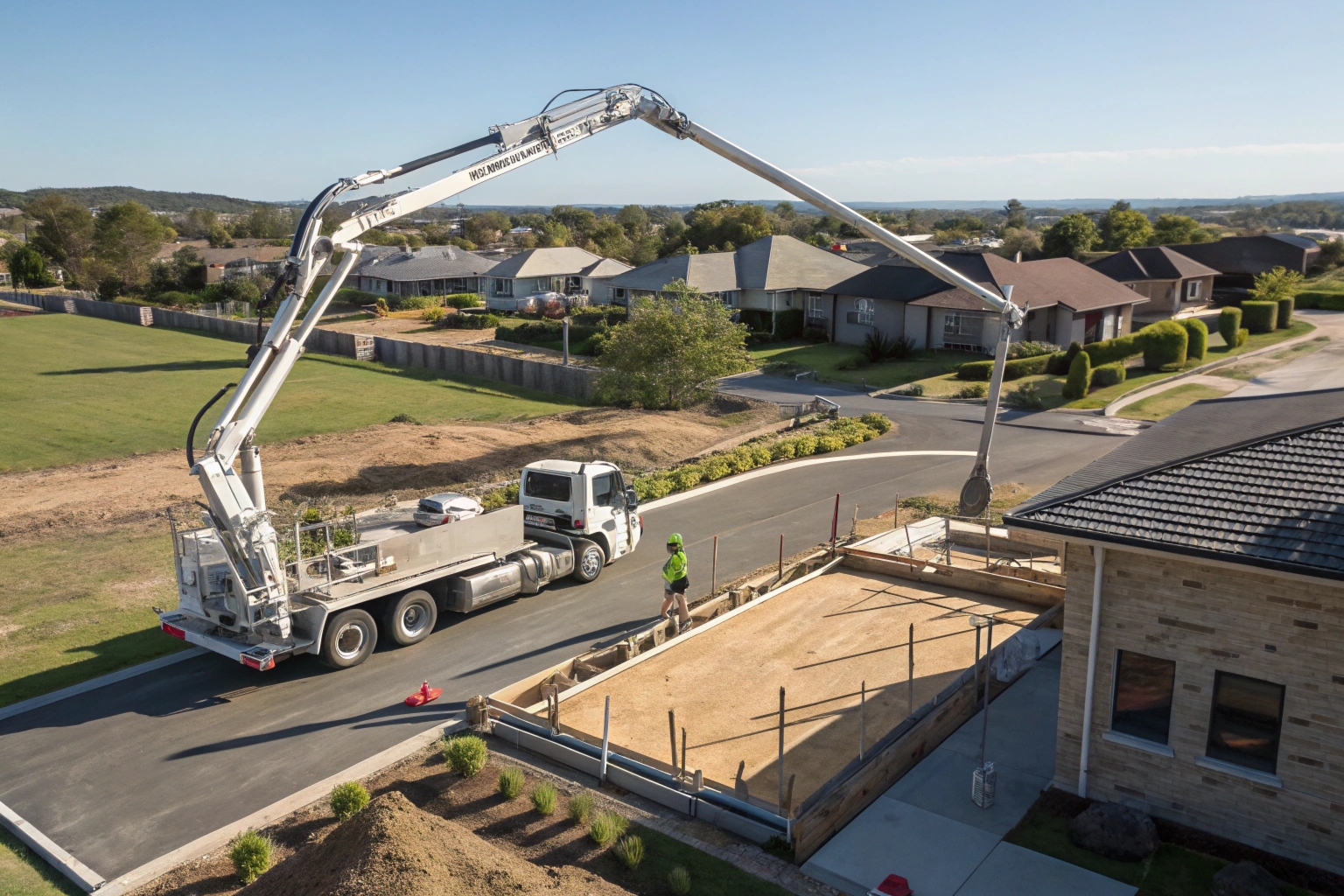
Concrete Pour, Finishing, and Curing The pour itself is time-critical. Finishing crews, pump trucks, and concrete scheduling all need to work in sequence. Once it’s down, proper curing protects the slab’s long-term strength.
Every stage is connected. That’s why the crew doing your slab needs to understand the whole process, not just the pour day.

Frequently Asked Questions — House Slabs on the Gold Coast
It depends on the site, but generally allow two to four weeks from when the site is prepared to pour day. Soil testing, engineering design, council or certifier approvals, sub-base prep, formwork, and steel placement all need to happen in sequence. Trying to rush that timeline creates problems.
Most residential builders and owner-builders will already have a structural engineer engaged through their building approval process. We work directly from the engineer’s drawings. If you don’t have one yet, we can point you in the right direction early in the process.
Concrete needs adequate curing time before the frame goes up. As a general guide, allow a minimum of seven days before loading the slab, though your engineer’s specification takes precedence. Rushing this stage risks surface damage and can affect long-term slab performance.
A waffle pod slab has a grid of stiffened internal beams that give it rigidity on reactive clay sites. A conventional slab sits flat on a compacted sub-base and suits more stable ground conditions. Your engineer specifies which one is appropriate based on your site classification — it’s not a choice, it’s an engineering decision.
That’s exactly what a geotechnical assessment is for. Sites classified as Class P — problem sites — require individual engineering assessment. We’ve worked across a wide range of challenging Gold Coast sites and know how to build appropriately to whatever the engineer specifies.
Get Your House Slab Right From the Start
The house slab is the one part of your build you can’t go back and fix without tearing everything above it apart. It’s worth getting right the first time, and that starts with having the right team on site from day one.
We work with homeowners building their first home, owner-builders managing their own projects, and residential builders who need a reliable concrete crew that understands how to work within a construction programme. Whatever your situation, the earlier you get in touch, the better — slab planning, soil testing, and engineering design all happen before any physical work starts, and getting that foundation right sets up everything that follows.
What You Get When You Work With Us
• Experience across all residential slab types — waffle pod, conventional ground-bearing, and suspended slabs across all site classifications
• Built to engineer specification — we work directly from your engineer’s drawings with no substitutions and no shortcuts
• Inspection-ready every time — every slab is prepared to pass the mandatory reinforcement hold point inspection without delays
• Licensed and fully insured — working within Queensland’s building approval framework on every project
• Local Gold Coast knowledge — we know the soil conditions, the growth corridors, and the coastal suburbs, and we bring that knowledge to every job
• Clear communication — you know where the project is at every stage, and we work to agreed timelines
Ready to Get Started?
Whether you’re at the early planning stage or ready to move, get in touch with our team for a free quote and consultation. Bring your engineer’s drawings if you have them — if you don’t, we can talk through what you’ll need before work begins.
Call us today or fill in our contact form to get the conversation started.
