
Professional Concrete Footpaths That Enhance Safety & Street Appeal

A concrete footpath does more than just connect two points on your property. Done right, it adds to the way your place looks, keeps people safe, and holds up year after year without giving you headaches. Whether you’re a homeowner wanting a clean garden path from the front door through to the backyard, or a commercial property owner needing a pedestrian walkway that handles serious foot traffic — the quality of the job underneath is what matters most.
We’re a Gold Coast-based concrete team laying paths for homes and businesses right across the region — from the northern suburbs through to the southern end of the coast. Residential access paths, side entries, garden connections, retail forecourts, industrial site walkways — we do it all. And we do it properly, with the right base prep, correct drainage gradients, and a finish that actually lasts in this climate.

Residential Concrete Footpaths
Commercial Concrete Footpaths
How We Install a Concrete Footpath
There’s no shortcut to a path that stays flat. Here’s how we do the job properly:
- Site marking and excavation — We mark out the path alignment and excavate to the correct depth, removing any soft spots, tree roots, or existing material that could cause movement later.
- Base preparation and compaction — A correctly compacted road base is what keeps your path from shifting. We compact in layers to give the slab a stable foundation to sit on.
- Formwork setup — Timber or steel formwork is set to the correct line and level, with the right gradient built in from the start for water to run off the surface properly.
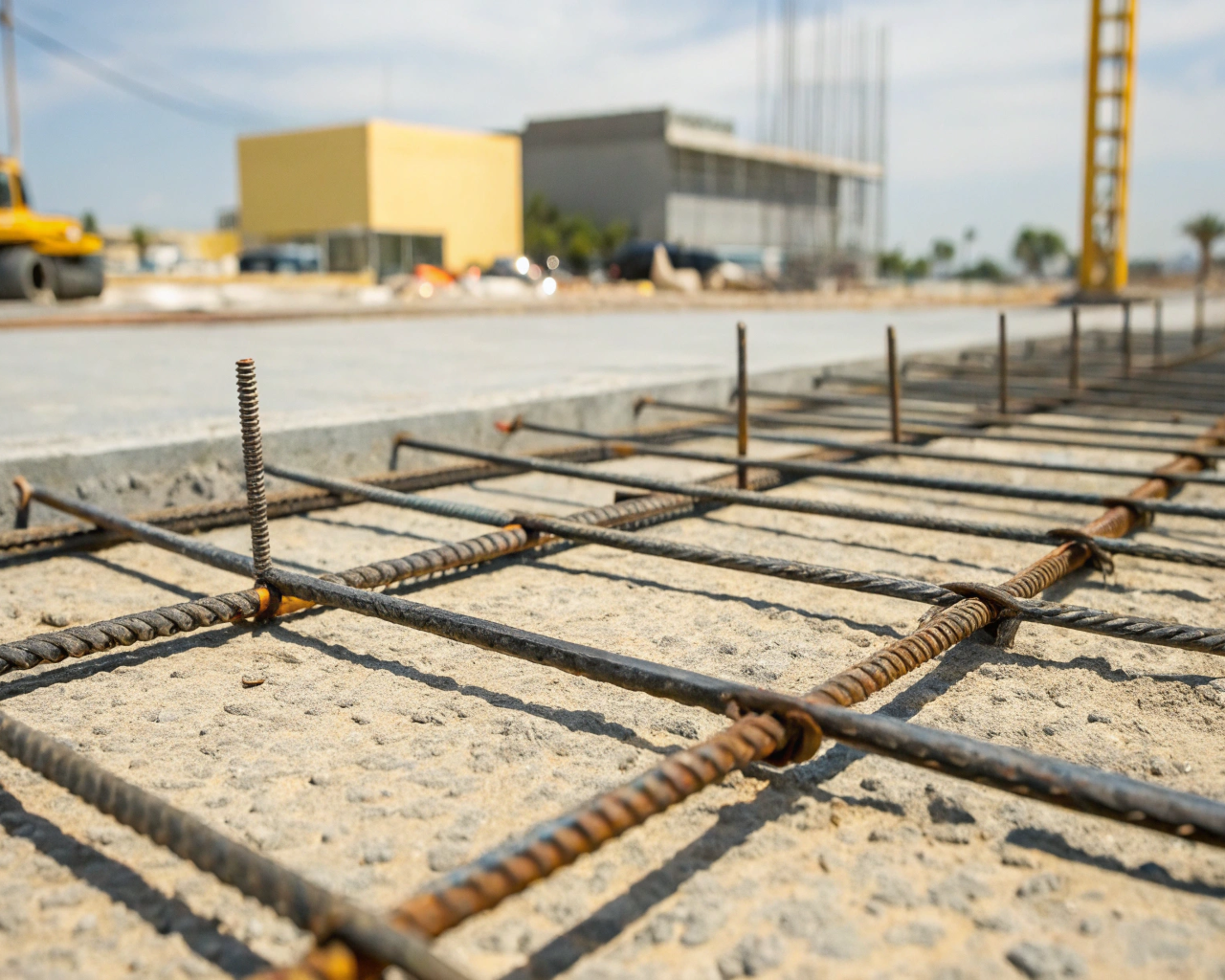
- Reinforcement — Where the path crosses softer ground, spans tree root zones, or handles heavier traffic, we add steel mesh or bar reinforcement to the slab.
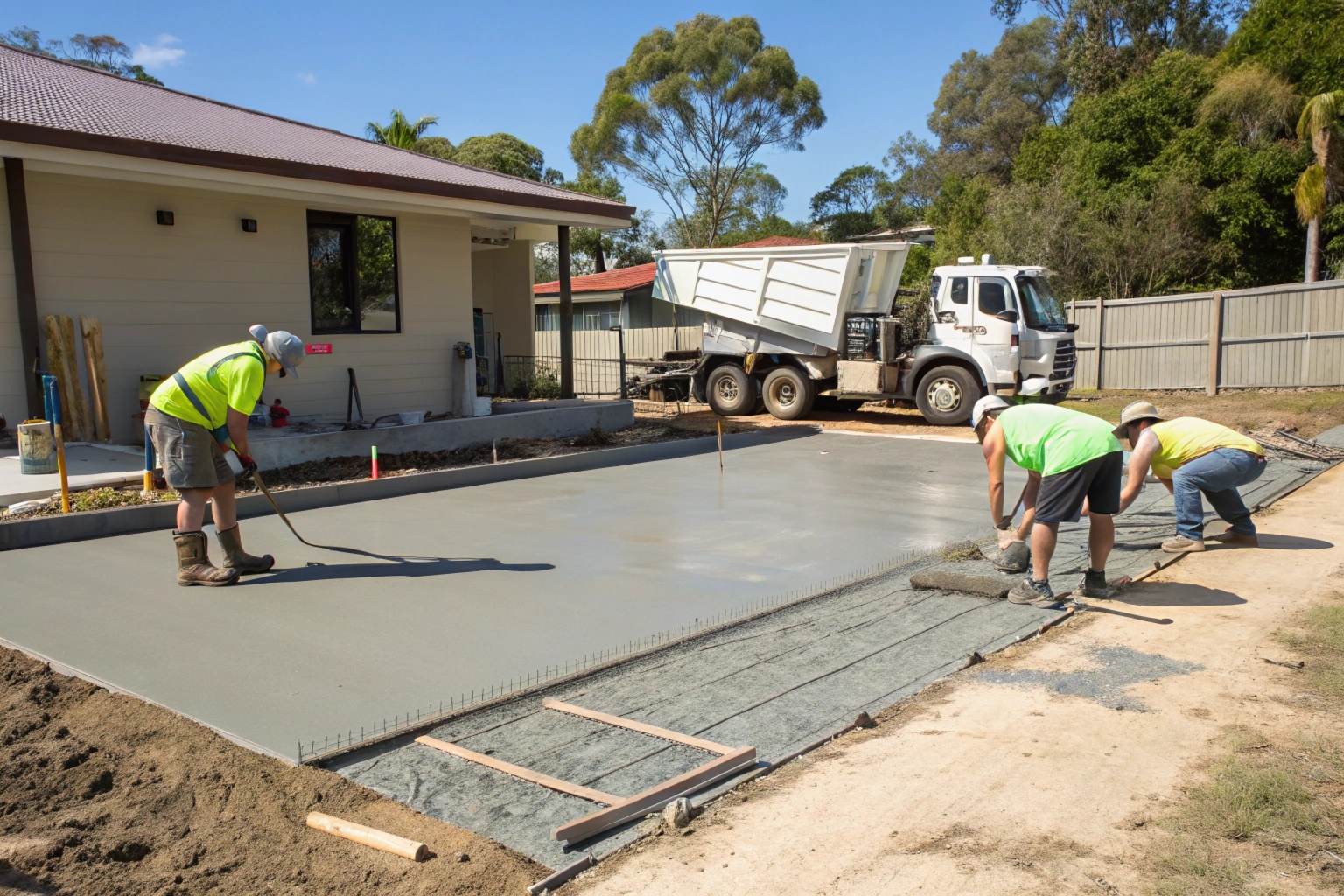
- Concrete pour and finish — We pour, screed, and finish to the specified level, applying a broom finish, exposed aggregate, or coloured finish depending on the application.
- Expansion joints — Control joints are placed at the right intervals to manage any natural movement in the slab and prevent random cracking.
- Curing — The slab is cured properly before anyone walks on it. Rushing this step is one of the main reasons paths develop surface cracks early.
Gold Coast-Specific Considerations
Tree root interference is a genuine issue in older Gold Coast suburbs like Labrador, Southport, and Nerang. Mature street trees and established garden trees have root systems that can lift and crack existing paths over time. When we’re installing in these areas, we assess the root situation before we dig, and we plan the slab accordingly — whether that means root barriers, adjusted depths, or path realignment to work around the problem rather than fight it.
Drainage gradient matters a lot on the Gold Coast. With annual rainfall regularly exceeding 1,200mm, a path that doesn’t drain correctly will pond water, create slip hazards, and deteriorate faster. We build the correct cross-fall and run-off direction into every path from the formwork stage, not as an afterthought.
Council requirements apply where your footpath adjoins a public verge, easement, or road reserve. Under Gold Coast City Council guidelines, works near the kerb or verge may require a permit or need to be built to specific standards for alignment and finish. We’re across these requirements and can advise you on what’s needed before the job starts.
Why Gold Coast Properties Trust Us for Concrete Footpaths
Tidy workmanship — We leave your property clean and the edges sharp. No rough edges, no excess concrete splashed across your garden beds.
Correct drainage gradients — Every path is formed with the right fall built in. Water moves off the surface the way it’s supposed to.
Licensed and insured team — Fully licensed concreting professionals, public liability insurance in place, and we work to Australian Standards on every job.
Residential and commercial experience — From a 10-metre garden path to a 200-metre commercial pedestrian walkway, we’ve done the full range.
Whether you’re a homeowner wanting a clean path through the garden or a commercial property manager replacing a failing pedestrian walkway, we’re ready to help.
Call us today or fill in the quote form to get a free quote on your concrete footpath anywhere on the Gold Coast.
FAQs About Concrete Footpath on the Gold Coast
How much does a concrete footpath cost on the Gold Coast?
Most residential concrete footpaths on the Gold Coast come in somewhere between $100 and $180 per square metre, depending on the finish, access to the site, and whether there’s any tree root or drainage work involved. Commercial paths vary more depending on thickness, reinforcement, and site conditions. I always recommend getting a site-specific quote rather than going off a rate per metre you found online — two jobs that look the same on paper can be very different once you’re standing in front of them. Give me a call and I’ll come out and give you a proper written quote at no charge.
How long does a concrete footpath take to install?
A standard residential path — say a side access or garden connection — can usually be formed, poured, and finished in a single day. Larger commercial jobs or anything with significant excavation or root work will take longer, and I’ll give you a realistic timeframe when I quote the job. Gold Coast’s wet season can also affect scheduling, so if you’re planning a path install between November and March, it’s worth booking early to get ahead of the weather delays. I’ll always keep you in the loop if conditions push the schedule.
How long do I need to wait before walking on the new path?
I tell most customers to stay off the path for at least 24 hours after the pour, and to avoid putting any real load on it — like a wheelbarrow or a vehicle — for at least seven days. Concrete reaches most of its working strength in the first week, but it continues curing and hardening for up to 28 days after the pour. In Gold Coast’s heat and humidity, the surface can feel firm quickly, but that doesn’t mean the slab underneath is ready for heavy use. Rushing this step is one of the most common reasons paths develop early surface damage.
Can you pour a new concrete path over my existing one?
In most cases I’d recommend against it, and I’ll be upfront about that during the quote. Pouring over an existing path that’s already cracked or shifted means the new slab inherits those same problems — and in a lot of Gold Coast properties where tree roots are the underlying issue, you’re just delaying the same outcome. In some situations an overlay or resurfacing product can work, but only where the existing slab is structurally sound and level. If the old path is lifting or cracking, it’s almost always better value to remove it properly and start fresh.
Do I need council approval for a concrete footpath on my Gold Coast property?
For paths entirely within your own property boundary — a garden path, side access, or backyard connection — you generally don’t need a permit. Where it gets more involved is when the path runs close to or across the nature strip, adjoins a public verge, or connects to kerbing along a road reserve, which falls under Gold Coast City Council’s infrastructure guidelines. I deal with this regularly, particularly in older suburbs like Southport, Labrador, and Nerang where properties sit close to the kerb. If your job is near the boundary I’ll flag it during the quote and advise you on what’s needed before we start.
How long will a concrete footpath last on the Gold Coast?
A properly installed concrete footpath should last 25 to 40 years with minimal maintenance — but that lifespan depends almost entirely on how the job was done in the first place. Gold Coast’s combination of high UV, heavy seasonal rain, and established tree root systems in older suburbs puts more pressure on paths than inland areas. Paths that were poured without proper base compaction, correct drainage gradients, or expansion joints tend to crack and shift well before their time. Get those fundamentals right from the start and you won’t be thinking about your footpath again for a very long time.
