
Concrete Structure Demolition Requires Planning, Not Guesswork
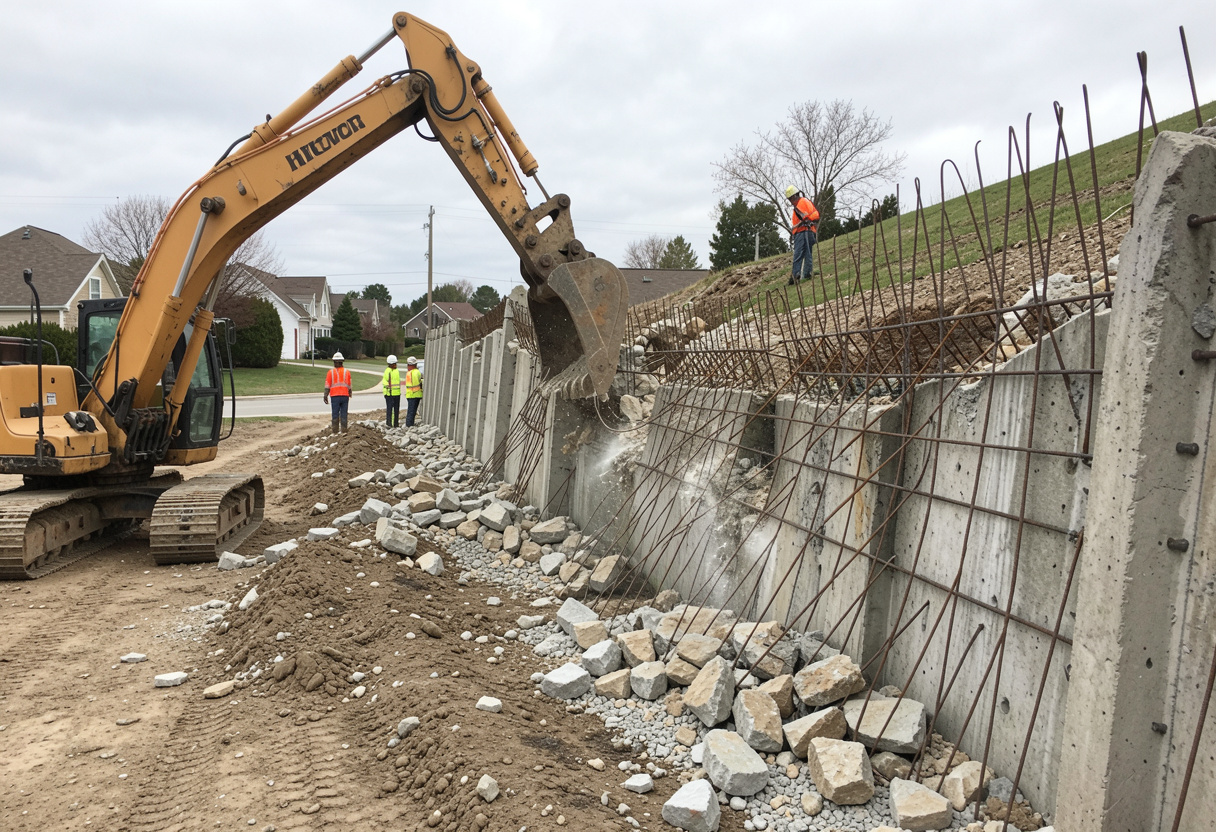
Knocking down a concrete retaining wall or pulling out a foundation is nothing like removing a driveway slab. There’s loads being carried, connections to adjacent structures, and failure modes that can go sideways fast if nobody’s assessed what they’re working with before the first blow lands. That’s the thing most homeowners don’t realise — concrete structure demolition on the Gold Coast isn’t just a matter of getting a machine in and swinging at it. Get it wrong and you’re looking at collapsed walls, severed services, or worse.
We’re Gold Coast concrete structure demolition specialists covering everything from retaining walls and footings to columns, piers, steps, and pool shells. Whether you’re a homeowner in Robina dealing with a failing retaining wall, a builder clearing a knockdown rebuild site in Mudgeeraba, or a developer starting fresh — we bring a planned, methodical approach to every structural demolition job from the assessment through to site clearance.

Concrete Structures We Demolish
Not all concrete is the same, and not all demolition jobs carry the same risks. Here’s what we handle across the Gold Coast and what professional execution looks like for each structure type.
Driveway Replacement Is Happening Across the Gold Coast Right Now
Across the Gold Coast, many homes still have original concrete driveways that are now twenty to thirty years old or more. In suburbs like Southport, Labrador, Nerang, Mudgeeraba, Robina, and Varsity Lakes, these ageing slabs are starting to show clear signs of wear.
Constant UV exposure weakens the surface, established tree roots cause lifting and cracking, and poor drainage develops as the ground shifts over time. What once was a smooth, functional driveway often becomes uneven, brittle, and difficult to maintain.
Why Proper Removal Is the First Step to a Long-Lasting New Driveway
For homeowners upgrading to exposed aggregate, coloured concrete, or pattern-imprinted finishes, the existing driveway can’t simply be covered over. The old slab needs to be fully removed to avoid future cracking and movement issues.
Proper driveway removal ensures a clean base, correct levels, and a solid foundation for the new installation. Done right, it sets the new driveway up to perform better, last longer, and deliver the finish you’re actually investing in.
Demolition Methods and Equipment
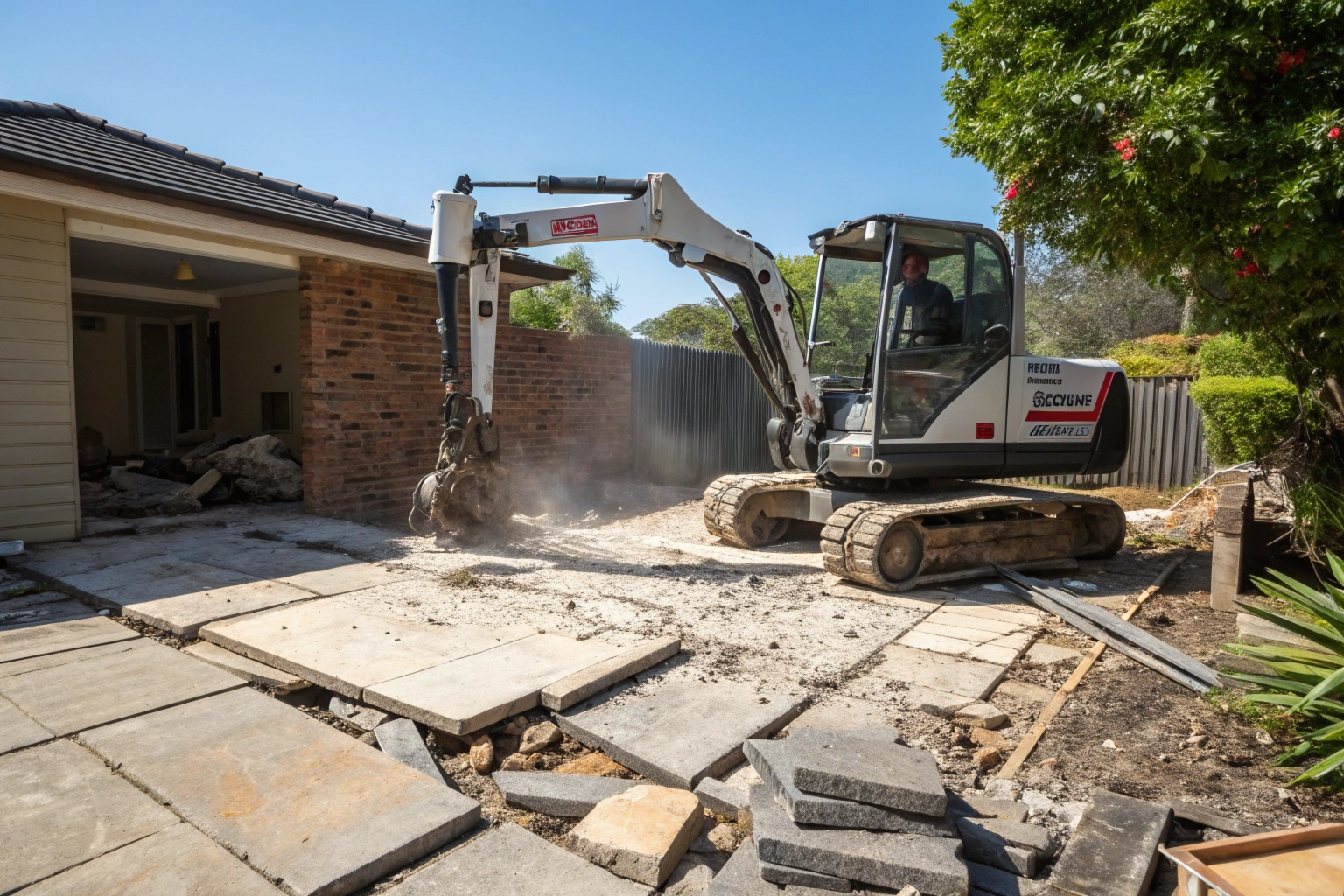
The right method for structural concrete demolition depends on the structure, the site, and what’s around it. We’re not a one-machine operation.
Structural Assessment and Engineer Involvement
For larger or more complex structural demolitions, we’ll recommend working alongside a structural engineer — and we treat that as a professional standard, not an unusual step.
Retaining wall demolition where significant soil loads are involved, foundation demolition adjacent to existing structures, and any situation where removal of the structure could affect the stability of retained ground or adjacent building elements are the scenarios where engineer input into the demolition sequence is the right call.
We work comfortably alongside engineers and within construction programmes managed by builders and developers. Having the demolition contractor, the engineer, and the builder aligned on sequencing before work commences is how complex structural demolition projects stay on track and on budget. If you’re a builder or developer who needs that level of coordination, we’re set up for it.
Safety Management on Every Job
Structural concrete demolition is classified work under Queensland Work Health and Safety legislation, and we operate accordingly.
Every structural demolition project gets a Safe Work Method Statement covering the specific hazards on that site — exclusion zones around the demolition area, overhead and underground service protection, dust suppression for silica-containing concrete breaking, and equipment and personnel controls throughout the work. Our WHS compliance documentation is current and available, and safety management is embedded in how we run every job — not something that gets attention only when the project value triggers a formal requirement.
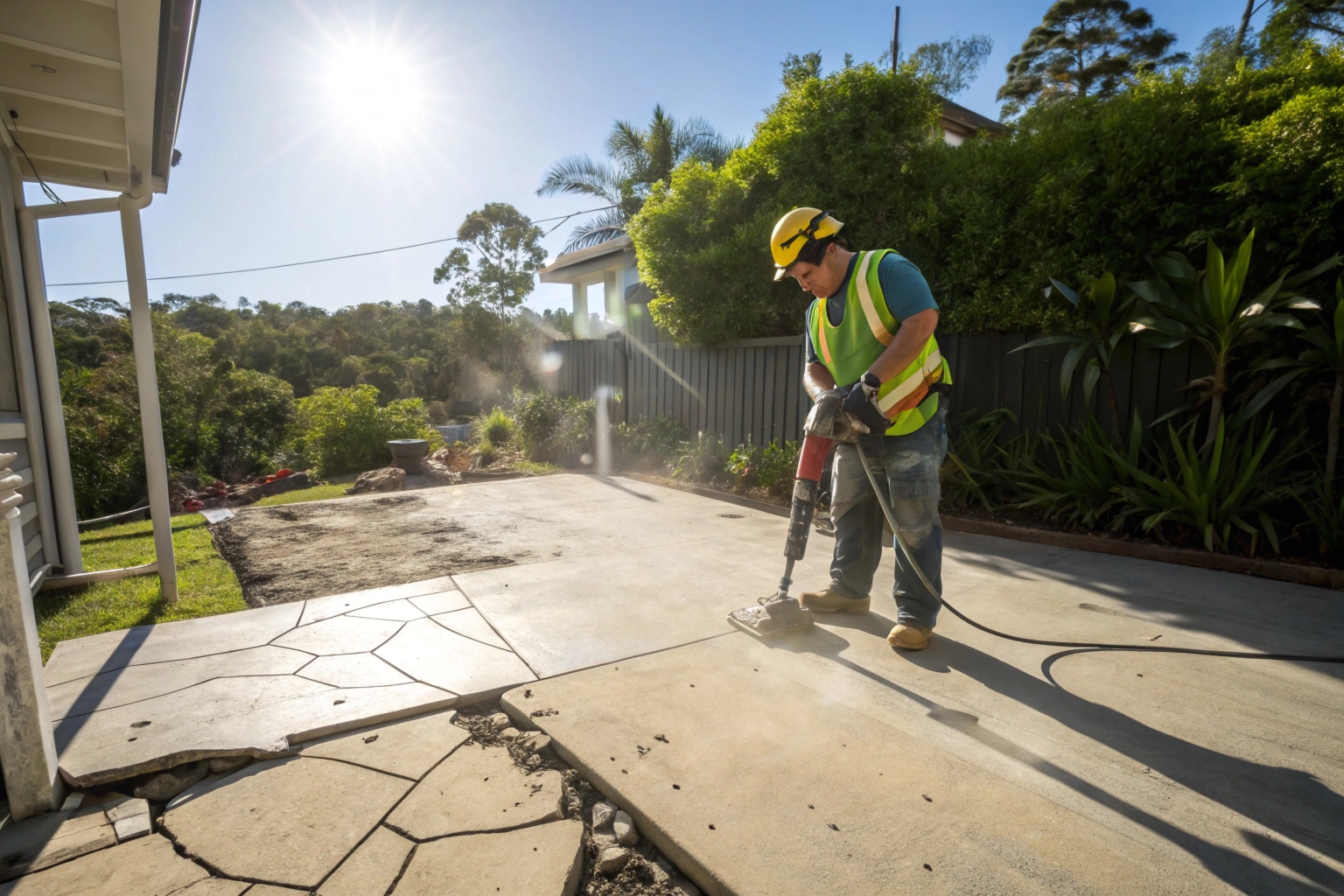
Silica dust from concrete breaking is a genuine health hazard and we manage it on every project through appropriate suppression and PPE controls. That’s not optional.
Why Gold Coast Homeowners, Builders, and Developers Work With Us
Structural concrete demolition done properly requires more than a machine and a willing operator. It requires assessment, planning, the right equipment selection, safety management, and the experience to recognise what each structure type demands before work begins.
We bring all of that to every project — from a single retaining wall replacement in Tallai to a full site clearance for a knockdown rebuild in Robina or a pool and landscape demolition in Hope Island. Our team is licensed and fully insured, our safety systems are current, and we’re set up to work alongside structural engineers and within builder-managed construction programmes.
Ready to talk through your structural demolition project? Get in touch to arrange a site assessment. We work with homeowners, builders, and developers right across the Gold Coast — no project too straightforward, none too complex.


FAQs About Concrete Structure Demolition on the Gold Coast
How long does a concrete structure demolition typically take on the Gold Coast?
Most residential structural demolitions — a retaining wall, old foundation, or set of concrete steps — are completed within one to two days once the assessment and planning are done. Larger jobs like full foundation demolition on a knockdown rebuild block in Robina or Mudgeeraba may run two to three days depending on access and volume of material. I’d rather give you an honest timeframe after seeing the site than throw out a number that ends up being wrong. A quick site visit is all it takes to give you a proper answer.
Do I need council approval to demolish a concrete retaining wall or structure on my Gold Coast property?
It depends on the size and location of the structure. In Queensland, demolition work on certain structures — particularly retaining walls over a metre in height or structures close to boundaries — can trigger local council notification or approval requirements. I always check this upfront as part of the planning process so nothing catches us halfway through the job. Gold Coast City Council has specific requirements, and getting this sorted before we start saves everyone headaches down the track.
Will the demolition work affect my neighbours or their property?
That’s exactly the kind of question I want homeowners asking before any structural work starts — especially on elevated hinterland blocks in Tallai or Reedy Creek where one retaining wall can be holding back a significant amount of soil. We establish proper exclusion zones, assess what the structure is currently retaining or supporting, and plan the demolition sequence so adjacent ground and structures are protected throughout. If there’s any real risk to a neighbouring boundary or structure, I’ll tell you before we start, not after something moves.
My block is on a slope and my retaining wall is failing — is it safe to demolish it?
A failing retaining wall on a sloped Gold Coast block needs to be treated carefully, not urgently swung at with a bucket. The retained soil height, what’s above the wall, and what condition the remaining structure is in all factor into how we approach the demolition sequence. In some situations I’ll recommend we bring in a structural engineer to confirm the safest removal method before we touch anything. Doing it right on a sloped block protects your property, your neighbours, and my team.
What happens to all the broken concrete after demolition?
All the rubble, reinforcement steel, and demolition material gets removed from site and taken to licensed disposal and recycling facilities — concrete is actually one of the more recyclable demolition materials. We leave the site cleared and graded so it’s ready for whatever comes next, whether that’s a landscaper, a builder, or a new structure going in. You won’t be left with a pile of broken concrete sitting on your block for weeks. Site reinstatement is part of the job, not an optional extra.
Can you demolish a concrete structure if access to my Gold Coast property is tight?
Tight access is pretty common across the Gold Coast — older established suburbs like Broadbeach Waters and Currumbin have properties where getting large equipment in isn’t straightforward. I carry hand-held breakers and hydraulic splitters for exactly these situations, which let us break structural concrete into manageable sections without needing a full-size excavator on site. The method changes based on what the access actually looks like, which is another reason a site visit before quoting matters. We figure out the right equipment for your specific site, not just whatever’s easiest to mobilise.
