
Where Strip Footings Are Used on Gold Coast Projects
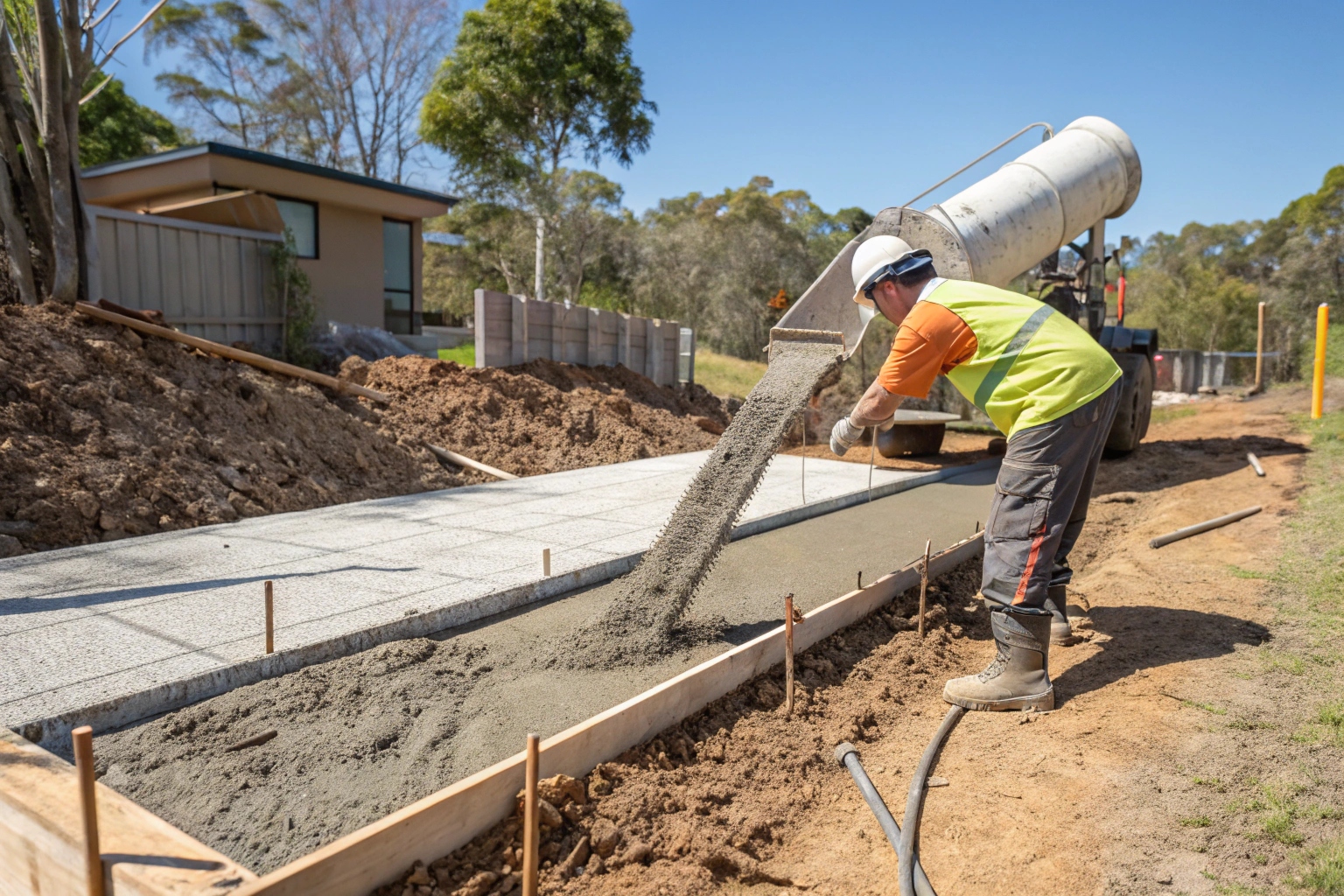
Strip footings show up across a wide range of residential and commercial construction work. Here’s where they’re most commonly required on Gold Coast projects:
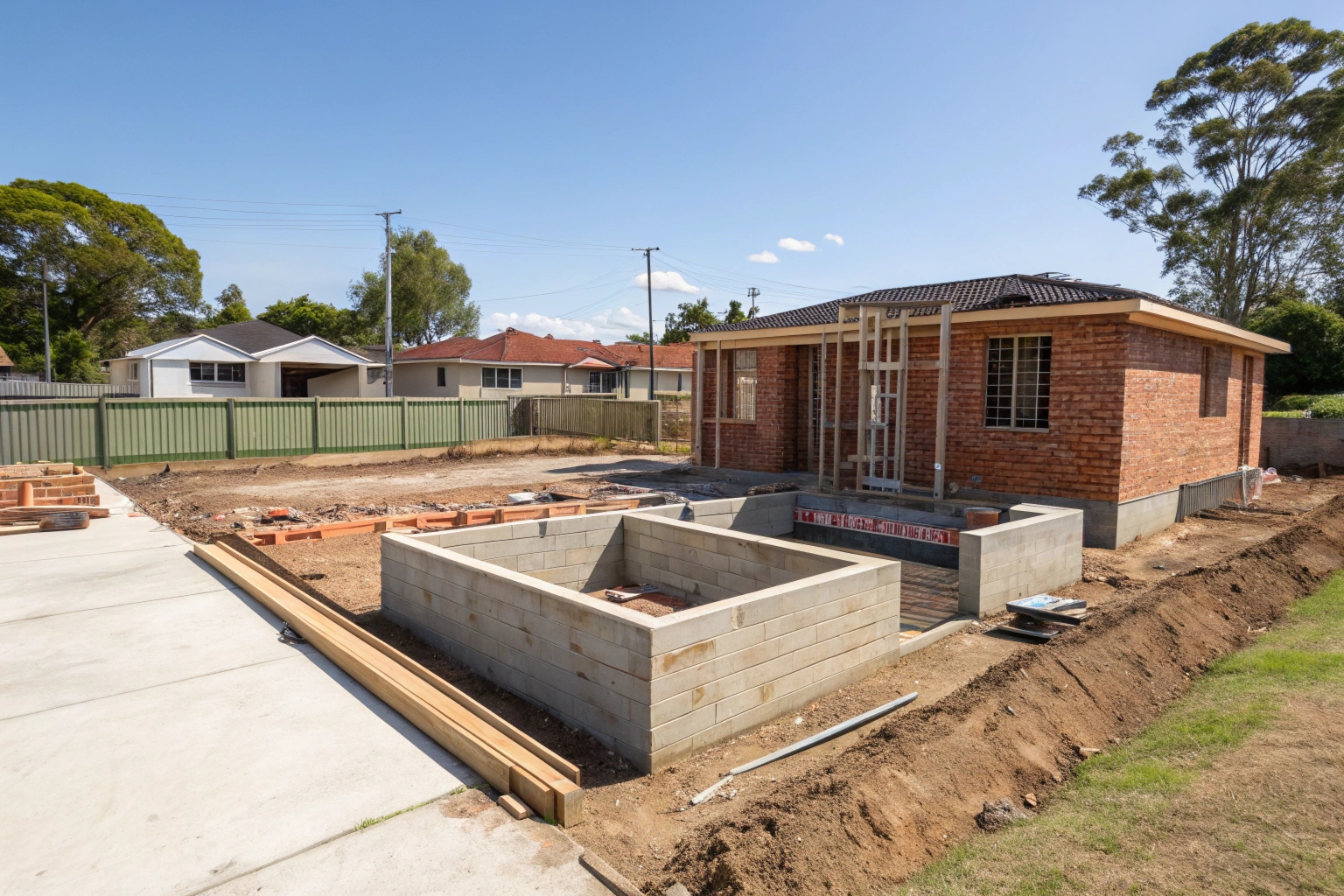
New Home Construction. Every new residential build that includes brick veneer, double brick, or concrete block walls needs continuous strip footings beneath the wall lines. Get the footing right at this stage and everything built above it sits on a solid, compliant base from day one.
Home Extensions and Additions. Adding a room, extending a living area, or building out a second storey all require new footings that match the structural demands of what’s going above. Strip footings for extensions need to account for the existing structure alongside the new loads — it’s not a cookie-cutter job.
Granny Flats and Secondary Dwellings. Secondary dwelling construction is booming across the Gold Coast growth corridor. Whether it’s a detached studio in Coomera or a full granny flat in Ormeau, strip footings are standard under any masonry wall construction in these builds.
Brick and Block Retaining Walls. Masonry retaining walls need footings that handle both the vertical weight of the wall and the lateral pressure pushing in from the retained soil. These are specifically engineered — they’re not the same as a building wall footing.
Boundary Walls and Fences. Masonry boundary walls across suburbs like Hope Island, Sanctuary Cove, and Pacific Pines need proper continuous footings beneath them to stay upright, level, and crack-free over time.
Commercial Masonry Structures. Warehouses, commercial extensions, and block wall structures all follow the same principle — the footing has to be designed and poured to spec before a single block goes down.

Frequently Asked Questions About Strip Footings on the Gold Coast
Strip footings are continuous concrete foundations that run along the full length of a wall, distributing the wall load evenly across the ground beneath it. Pad footings are isolated concrete pads that carry point loads — typically beneath steel or timber posts. If you’re building a masonry wall of any kind, strip footings are what’s required.
That depends on your site classification under AS 2870. On stable sandy soils closer to the coast, standard depths may apply. On reactive clay sites through Pimpama, Coomera, Ormeau, and similar areas, footings often need to go considerably deeper to get below the active zone where seasonal moisture movement occurs. Your structural engineer determines the required depth for your specific site — there’s no one-size answer across the Gold Coast.
For any masonry wall construction, home extension, new build, or retaining wall above the regulated height threshold in Queensland — yes. The footing dimensions, reinforcement specification, and concrete strength all come from the engineer’s design. Pouring footings without an engineer’s drawings on a project that requires them creates compliance problems and puts the structure at risk.
A minimum of 20MPa is standard for residential strip footings, though engineer specification may call for higher strength depending on wall loads, footing dimensions, and site conditions. The concrete mix is specified on the engineer’s drawings and that’s what gets ordered and poured — not whatever’s cheapest on the day.
Concrete needs adequate curing time before masonry loads are applied above it. In typical Gold Coast conditions, a minimum of seven days is standard before brickwork commences, though this can vary based on concrete mix, weather conditions during the cure period, and engineer or certifier requirements on specific projects. Loading a footing too early affects its final strength.
In most cases, yes — but the inspection timing depends on your approval type. Under a standard building approval in Queensland, footing reinforcement is typically a hold point inspection, meaning the certifier inspects the steel placement and trench condition before the concrete is poured. We coordinate with your certifier to make sure this is scheduled correctly so there are no delays between excavation and pour.
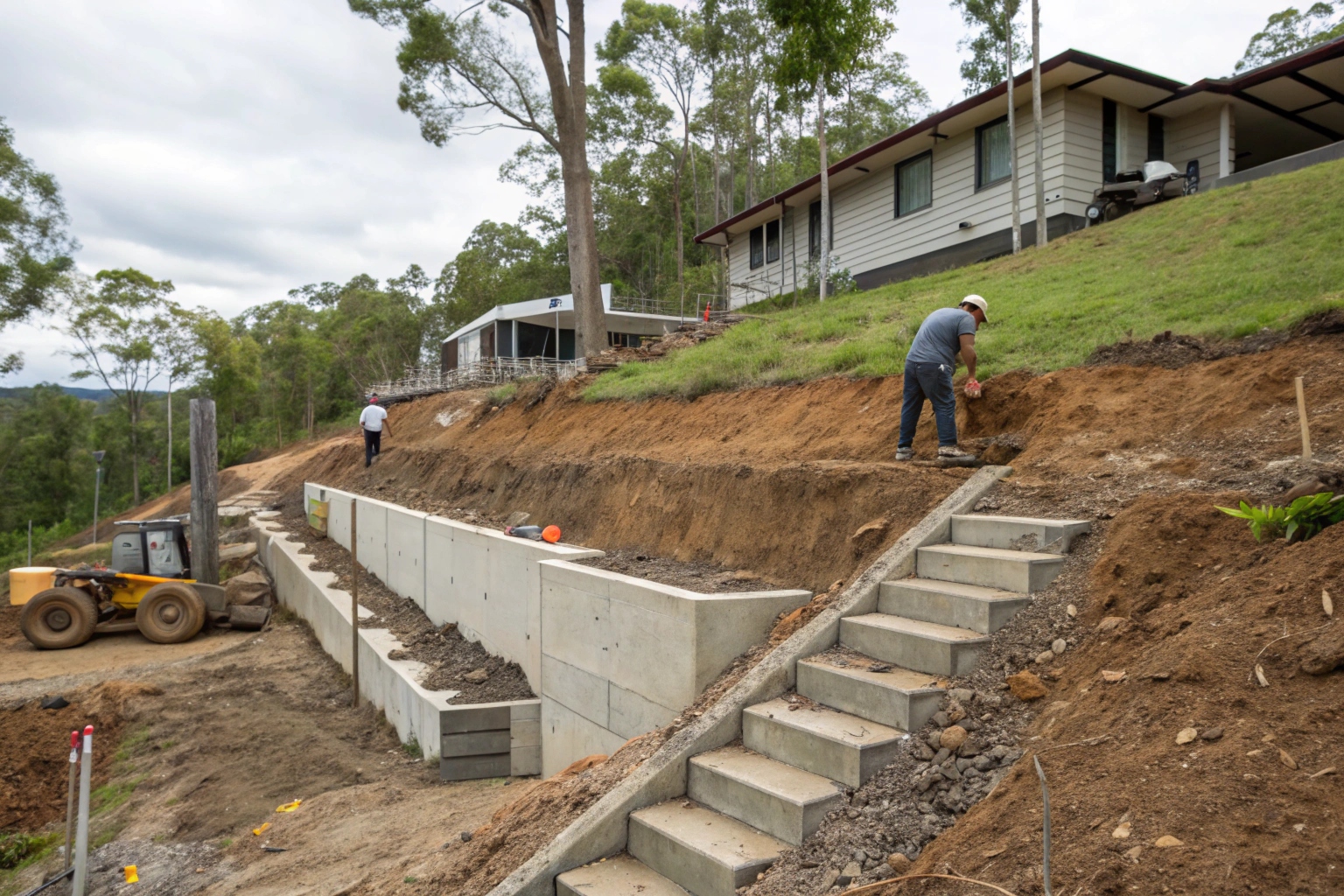
Yes, and they’re common on sloping Gold Coast properties. On a sloping site, strip footings are typically stepped down the slope at regular intervals to maintain the required footing depth relative to finished ground level. The step heights and lengths are specified by the engineer. It adds some complexity to the set out and pour but it’s standard work on the kinds of sites you find throughout the hinterland fringe and hillside suburbs.
It happens. Sometimes the excavation reveals fill material, soft spots, or unexpected ground conditions that weren’t evident from the site classification process. When that occurs, work stops and the engineer is notified before the pour proceeds. Pouring over ground that doesn’t match the design assumption is how footing failures start. The right call is always to get the engineer back involved before continuing.
Ready to Get Your Strip Footings Done Right?
Strip footings are the one part of your project where there’s no fixing mistakes after the fact. Once the masonry is up, the footing is buried and whatever’s wrong with it stays wrong — showing up later as cracked walls, uneven courses, or worse, a structure that doesn’t pass inspection and needs to come down.
Getting it right the first time comes down to working with a team that reads the engineer’s drawings properly, understands Gold Coast soil conditions, and manages the certifier inspection process without you having to chase anyone.
That’s what we do on every strip footing project — new builds, home extensions, granny flats, boundary walls, masonry retaining walls, and commercial block wall construction across the Gold Coast and surrounding areas including Pimpama, Coomera, Ormeau, Nerang, Mudgeeraba, Hope Island, Sanctuary Cove, and the broader Gold Coast growth corridor.
What You Get When You Work With Us
• Strip footings poured to engineer specification on every project
• Experienced team that understands AS 2870 site classifications and Gold Coast soil conditions
• Coordinated certifier inspection management so your project stays on schedule
• Licensed and insured — all work completed to Queensland building code requirements
• Straight communication from quote through to pour complete
Get a Free Quote on Your Strip Footings
Whether you’re a homeowner planning an extension, an owner-builder managing your own new build, or a builder looking for a reliable footing crew for your next Gold Coast project — we’re ready to help.
Call us today or fill in the quote form and we’ll get back to you fast with a clear, no-obligation price for your strip footings.
Your walls deserve a solid start. Let’s build it right from the ground up.
