
Residential and Commercial Concrete Footings Across the Gold Coast
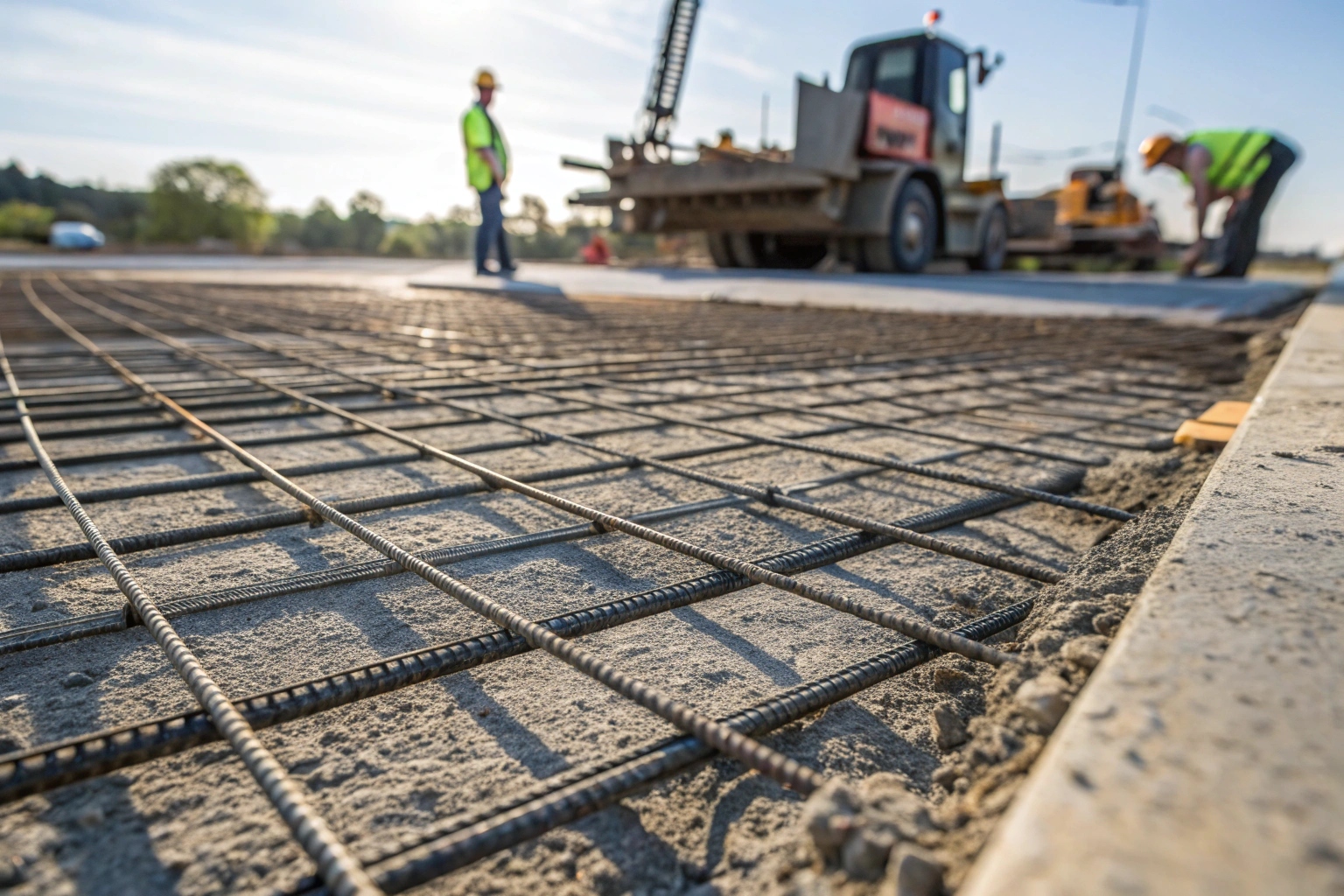
Residential and commercial concrete footings across the Gold Coast cover a wide range of project types, and we work across both sectors with the same attention to engineering specification and site compliance. On the residential side, we handle footings for new home builds, extensions, decks, pergolas, carports, sheds, retaining walls, and outbuildings — working with owner-builders and licensed builders alike. On the commercial side, we pour footings for light industrial structures, commercial sheds, mezzanine floors, and multi-use developments where structural loads and compliance requirements are more demanding.
Across every project type, our approach stays consistent — we work from the engineer’s footing schedule, prepare the site to specification, inspect bearing ground before any concrete is placed, and ensure every pour is ready for certifier inspection before proceeding. Our team is fully licensed and insured, and we operate across the full Gold Coast region, including coastal suburbs, hinterland sites, and the high-growth southern corridor. If footings are coming up in your project programme, get in touch, and we’ll get the right conversation started.

Factors That Affect Footing Design on the Gold Coast
Footing design on the Gold Coast is driven by a combination of site-specific variables, and no two sites are identical. What works on a stable sandy block in Broadbeach Waters won’t necessarily apply to a highly reactive clay site in Pimpama or a sloped hinterland property in Tamborine Mountain. Every variable below has a direct bearing on footing depth, width, reinforcement, and concrete specification:
- Site classification determined by geotechnical assessment under AS 2870
- Soil reactivity and seasonal moisture variation at the specific location
- Depth to stable bearing ground beneath topsoil, fill layers, and disturbed material
- Proximity to trees with established root systems that draw moisture and affect soil movement
- Slope and drainage characteristics of the block and surrounding ground
- Type, height, and load of the structure being supported above
- Queensland Building Code and NCC compliance requirements applicable to the structure
We account for every one of these factors before a footing schedule is confirmed and before any excavation begins — because getting the design right at this stage is what determines how the structure performs for the life of the build.
Types of Concrete Footings We Install on the Gold Coast
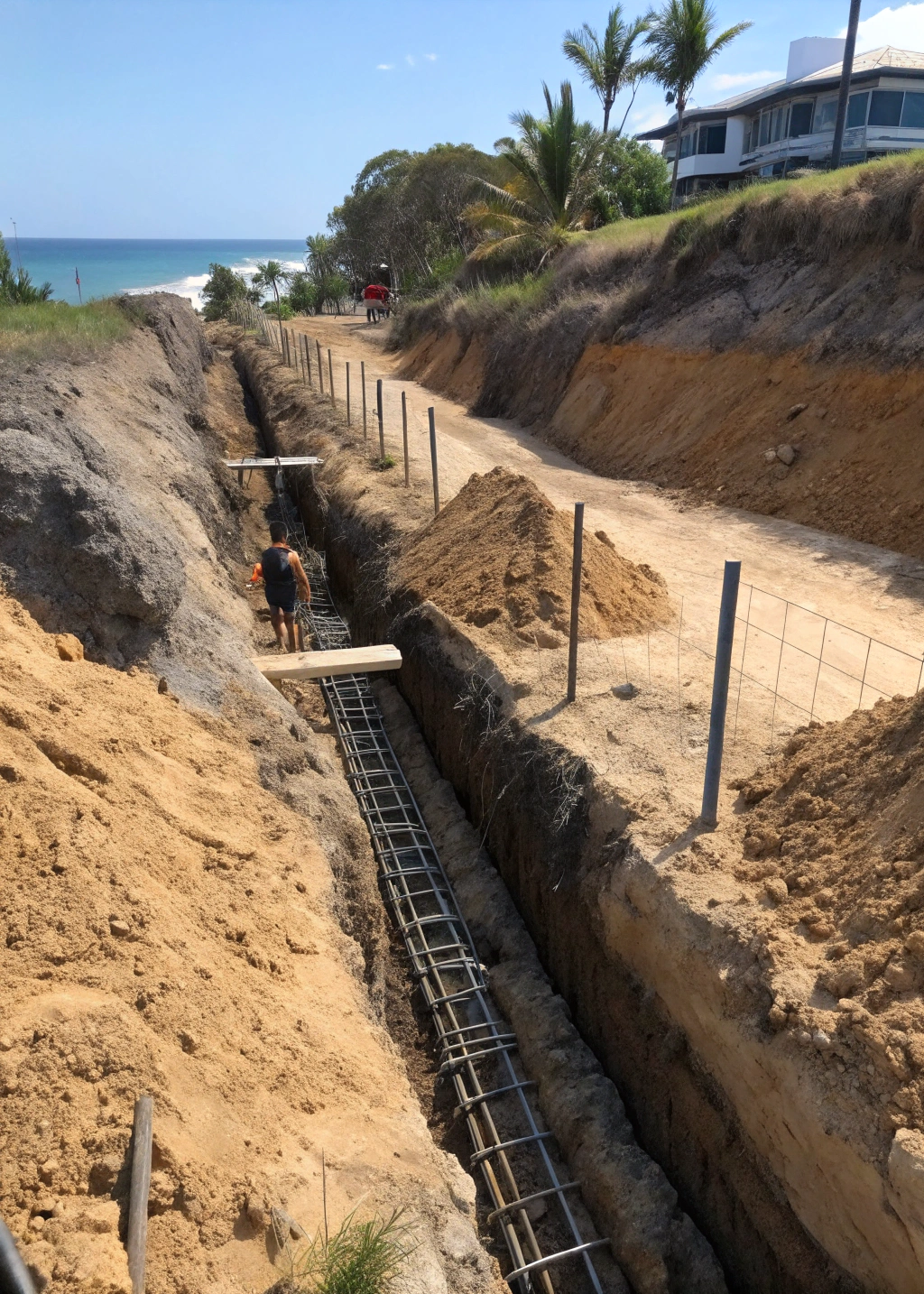
Concrete footings on the Gold Coast cover a wide range of structural applications, and the right footing type depends on the load being carried, the structure above, and the ground conditions at your specific site. We install pad footings for posts and columns, pier footings for elevated structures and sloped blocks, strip footings for continuous wall and frame loads, and combined or raft footing systems where more complex structural requirements apply. Every footing we pour is built to the engineer’s footing schedule — correct dimensions, correct reinforcement, correct concrete mix, and correct depth into bearing ground. No guesswork, no shortcuts, and no cutting corners on the one element your entire structure depends on.
Pad Footings for Posts, Columns and Point Loads
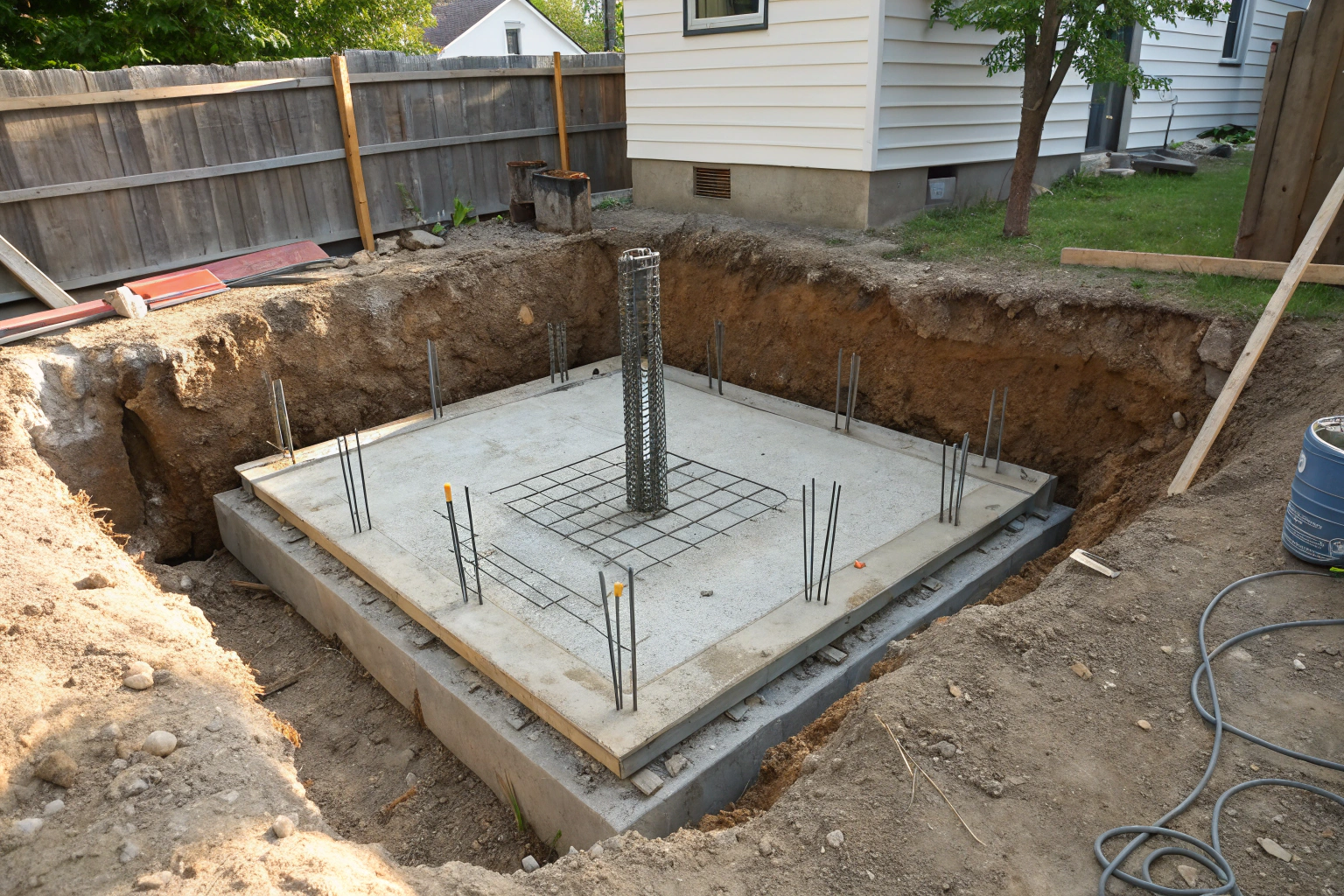
Pad footings are isolated concrete bases designed to carry the concentrated load of a single post or column and transfer it safely into the bearing ground below. We use them across a wide range of applications — pergola posts, carport columns, shed frames, and structural steel bases. Each pad is sized and reinforced to the engineer’s specification for the load it carries.
Pier Footings for Elevated Structures and Decks
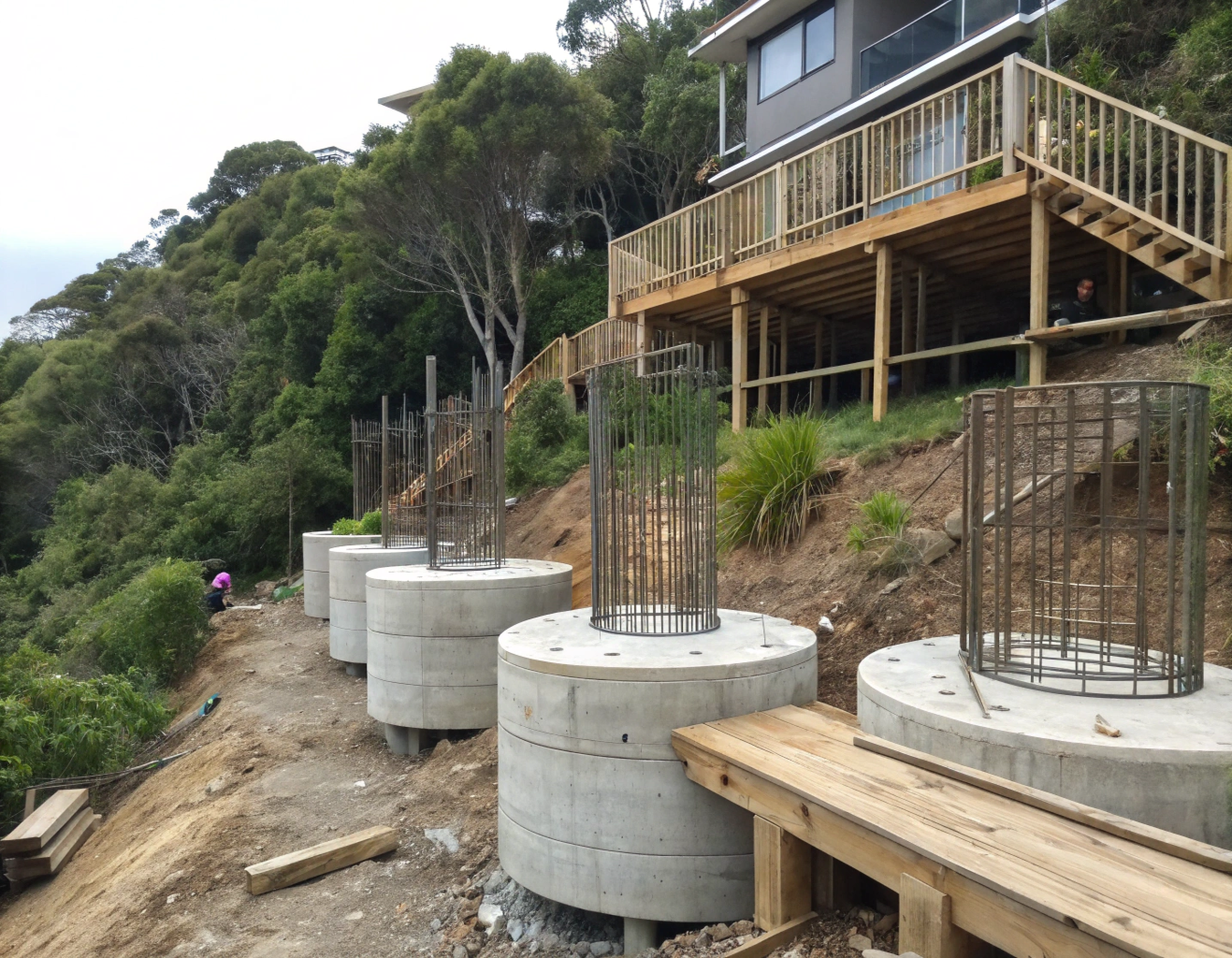
Pier footings are drilled or excavated to depth, then filled with reinforced concrete to create a vertical load-bearing element that reaches stable ground beneath the surface. They’re the standard footing type for elevated timber decks, raised platforms, and structures on sloped Gold Coast blocks where surface soils can’t be relied on. Depth and diameter are specified by the engineer based on site conditions and the load above.
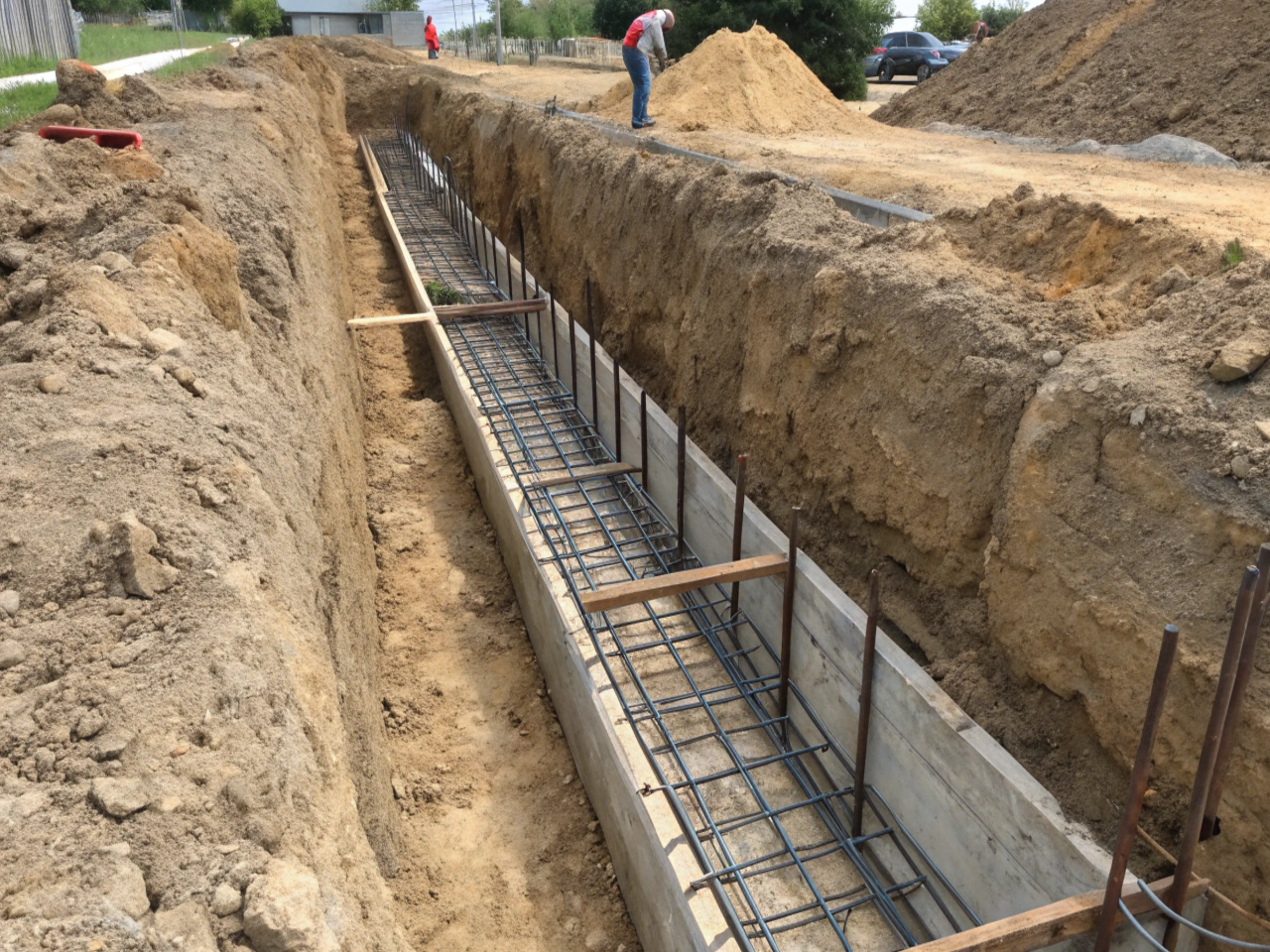
Strip Footings for Continuous Wall and Frame Loads
Strip footings run continuously beneath wall lines and structural frames, distributing the load along their length rather than concentrating it at a single point. We pour strip footings for brick and blockwork walls, residential subfloor frames, and retaining structures where a continuous bearing base is required. Reinforcement layout, concrete mix, and footing dimensions are all set out in the engineer drawings before we break ground.
Why Footing Design Must Match Your Site Classification
Footing design on the Gold Coast is not one-size-fits-all. Every site carries a classification under AS 2870 — the Australian Standard that governs residential slab and footing design based on soil reactivity and ground movement potential. That classification is determined by a geotechnical assessment and directly dictates the footing depth, width, reinforcement requirements, and concrete specification your structure needs. Building to the wrong classification — or ignoring the classification altogether — means your footings may be structurally inadequate for the ground they’re sitting in.
The consequences of a mismatch between footing design and site classification include:
- Foundation movement as reactive soils expand and contract with seasonal moisture changes
- Wall cracking in brick, blockwork, and rendered surfaces above
- Structural settlement where footings have not reached stable bearing ground
- Costly rectification work that far exceeds the original cost of getting the footing right
We work from engineer-provided footing schedules on every project, cross-referencing the site classification and geotechnical data to make sure every pour meets the structural requirements of that specific site — not a generic standard that may not apply.
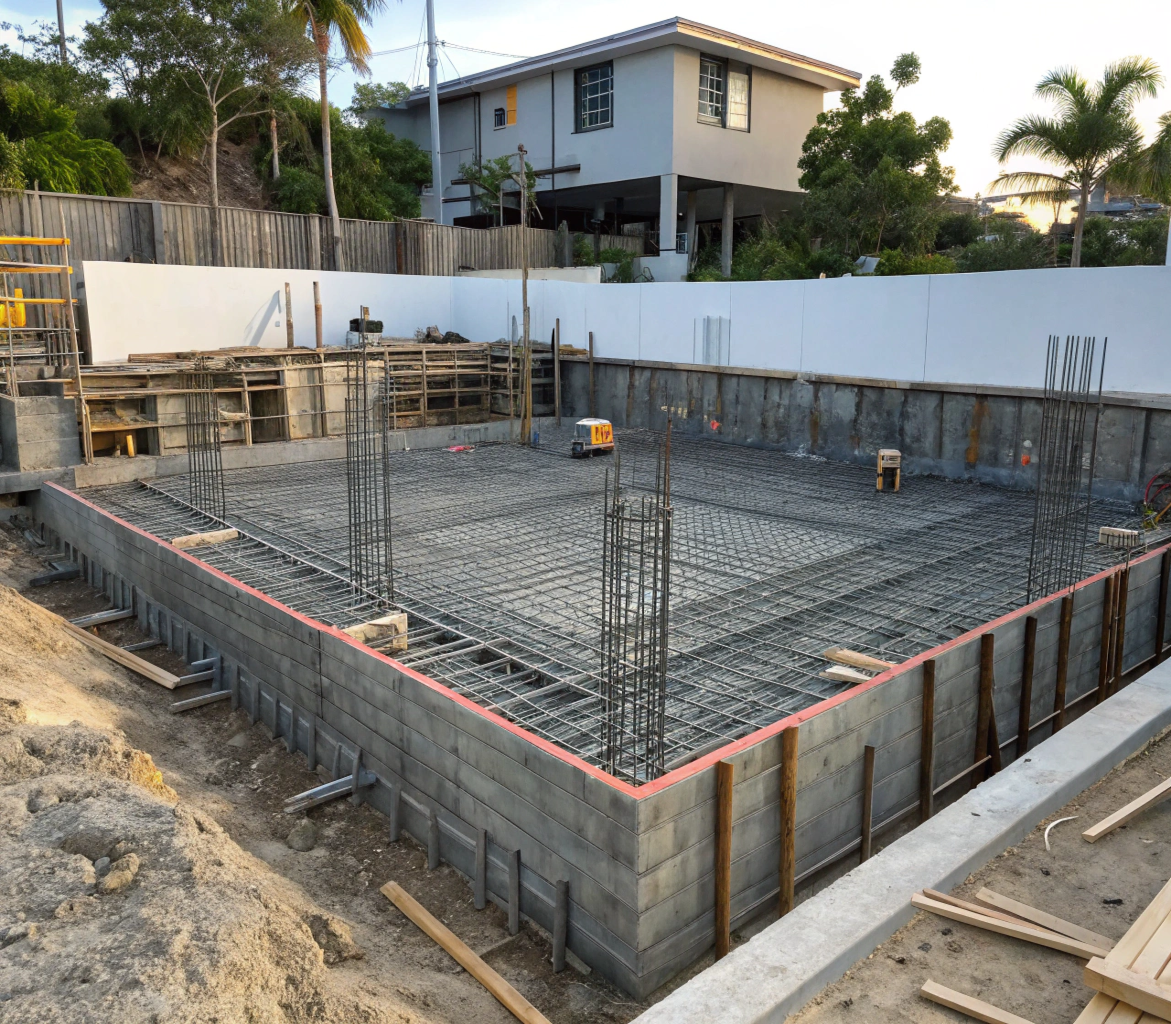
Combined and Raft Footing Systems for Complex Structures
Combined and raft footing systems are used where structural loads are too complex, too heavy, or too widely distributed for individual pad or strip footings to handle on their own. A combined footing links two or more column or post bases into a single reinforced concrete element — typically used where columns are closely spaced or where one column sits close to a boundary and a standard pad can’t be centred under the load. A raft footing extends a reinforced concrete slab across the full footprint of the structure, spreading the load over the widest possible bearing area and reducing the pressure on any single point of ground.
Both systems are common on Gold Coast sites where soil conditions are variable, where structures carry significant combined loads, or where a geotechnical assessment has identified ground that requires the load to be spread rather than concentrated. We work directly from engineer-provided footing schedules on every combined and raft footing project — ensuring reinforcement layout, slab thickness, and concrete specification are met before any pour proceeds.
What We Need to Get Started on Your Footing Project
Getting your project moving quickly comes down to having the right information on hand before we quote. The more detail you can provide upfront, the more accurate our scope and the faster we can get your project into the programme. For most footing projects on the Gold Coast, here’s what helps us hit the ground running:
- Engineer’s footing schedule or structural drawings for the project
- Site address and access details including any constraints we need to account for
- Geotechnical report or soil classification if already completed by your engineer or certifier
- Structure type and approximate load requirements — deck, pergola, retaining wall, house frame, or commercial structure
- Information on existing structures, underground services, or site constraints that may affect excavation
If you don’t have all of this together yet, that’s not a problem. We’re used to working with owner-builders and builders at different stages of the planning process and can advise on what’s needed to move forward. Get in touch and we’ll take it from there.
FAQ — Concrete footings Gold Coast
Most pergola structures on the Gold Coast use pad footings for each post base. Size and depth depend on post spacing, roof load, and your site classification — your engineer or certifier will specify the footing schedule before work begins.
Depth depends on the structure, soil classification, and what’s beneath the surface. Pier footings for decks typically reach 900mm to 1200mm. Pad and strip footings are shallower but still engineered to reach stable bearing ground below topsoil and fill layers.
For most structural applications in Queensland — including house frames, decks, retaining walls, and commercial structures — engineer-designed footing schedules are required. Your private certifier will confirm what’s needed for your specific project before construction can proceed.
These southern Gold Coast growth corridors sit on highly reactive clay soils that expand and contract significantly with seasonal moisture changes. Footings not designed to account for that ground movement can cause serious structural problems, including wall cracking and foundation settlement over time.
AS 2870 is the Australian Standard governing residential slab and footing design based on soil classification and reactivity. Your site is assessed and assigned a classification that directly determines footing depth, width, reinforcement requirements, and concrete mix specification for your project.
Get a Free Quote for Concrete Footings on the Gold Coast
Concrete footings are not the place to cut corners — and if you’re building anything structural on the Gold Coast, you want a team that pours to engineer specification, works within Queensland’s compliance framework, and gets every footing inspection passed without delays. That’s exactly what we do, across residential and commercial projects from the northern Gold Coast through to the southern growth corridor.
Get in touch today for a free quote on your footing project. Whether you’ve got engineer drawings ready to go or you’re still in the planning stage, we’re happy to talk through what’s involved and get your project moving in the right direction.
