
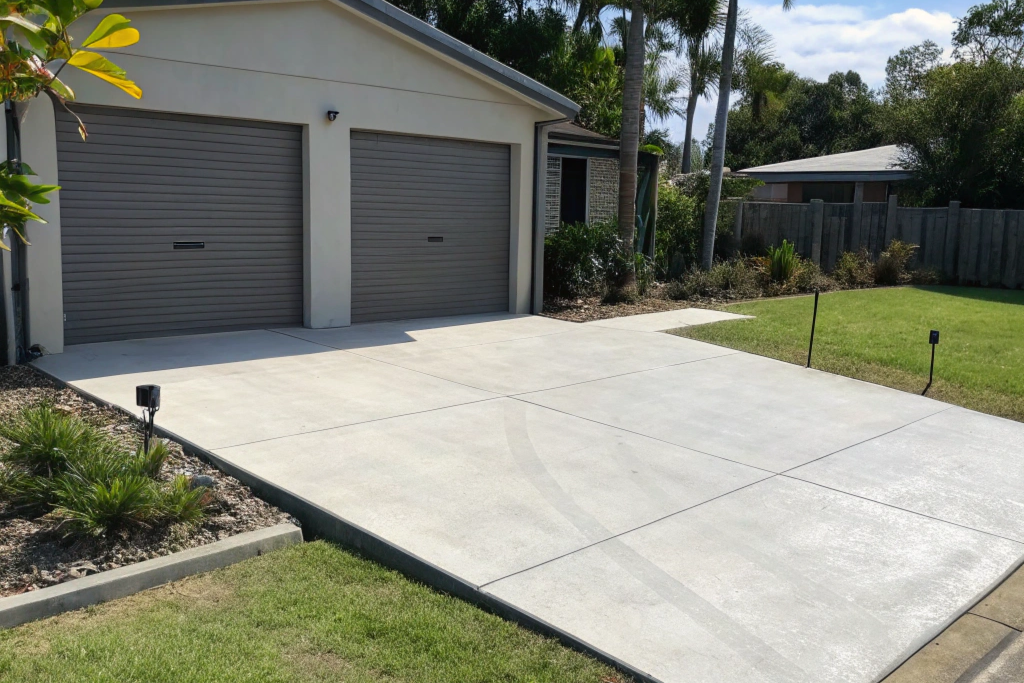
Garage Slab Installation Across Gold Coast Growth Corridors
Garage slab installation is among the most in-demand concrete services across the Gold Coast’s northern and western growth corridors — and for good reason. Suburbs like Coomera, Upper Coomera, Pimpama, Ormeau, and Nerang are home to larger residential blocks that give homeowners the space to build detached garages, workshop sheds, and multi-vehicle storage buildings that simply aren’t possible on tighter coastal lots.
New garage additions are consistently among the most common residential construction projects in these areas — added after the home is established, built alongside new constructions, or going up as part of broader property improvements on acreage and lifestyle blocks further west.
What these growth corridor suburbs also share is reactive soil conditions — expansive clay-based soils that move with changes in moisture content across the wet and dry seasons. A garage slab poured without accounting for that movement will crack and settle over time, regardless of how well the concrete itself was mixed and finished.
We design every slab in these areas with sub-base preparation and reinforcement specification that accounts for local soil behaviour from the ground up.

Garage Slab Applications We Handle Across the Gold Coast
These are the most common pours we handle — typically a straightforward slab for one passenger vehicle, designed to the correct thickness with mesh or steel reinforcement to handle daily loading without cracking over time.
Carry significantly more load and require careful attention to formwork layout, reinforcement placement, and joint positioning to manage the wider span without creating weak points across the slab surface.
Increasingly common on larger residential blocks across the Gold Coast’s growth corridors — sit away from the main structure and often require a more considered sub-base preparation, particularly on sites with fill or reactive soils.
Need correct gradient and drainage designed in from the start, given they’re fully exposed to Gold Coast’s heavy summer rainfall with no walls or doors to redirect runoff.
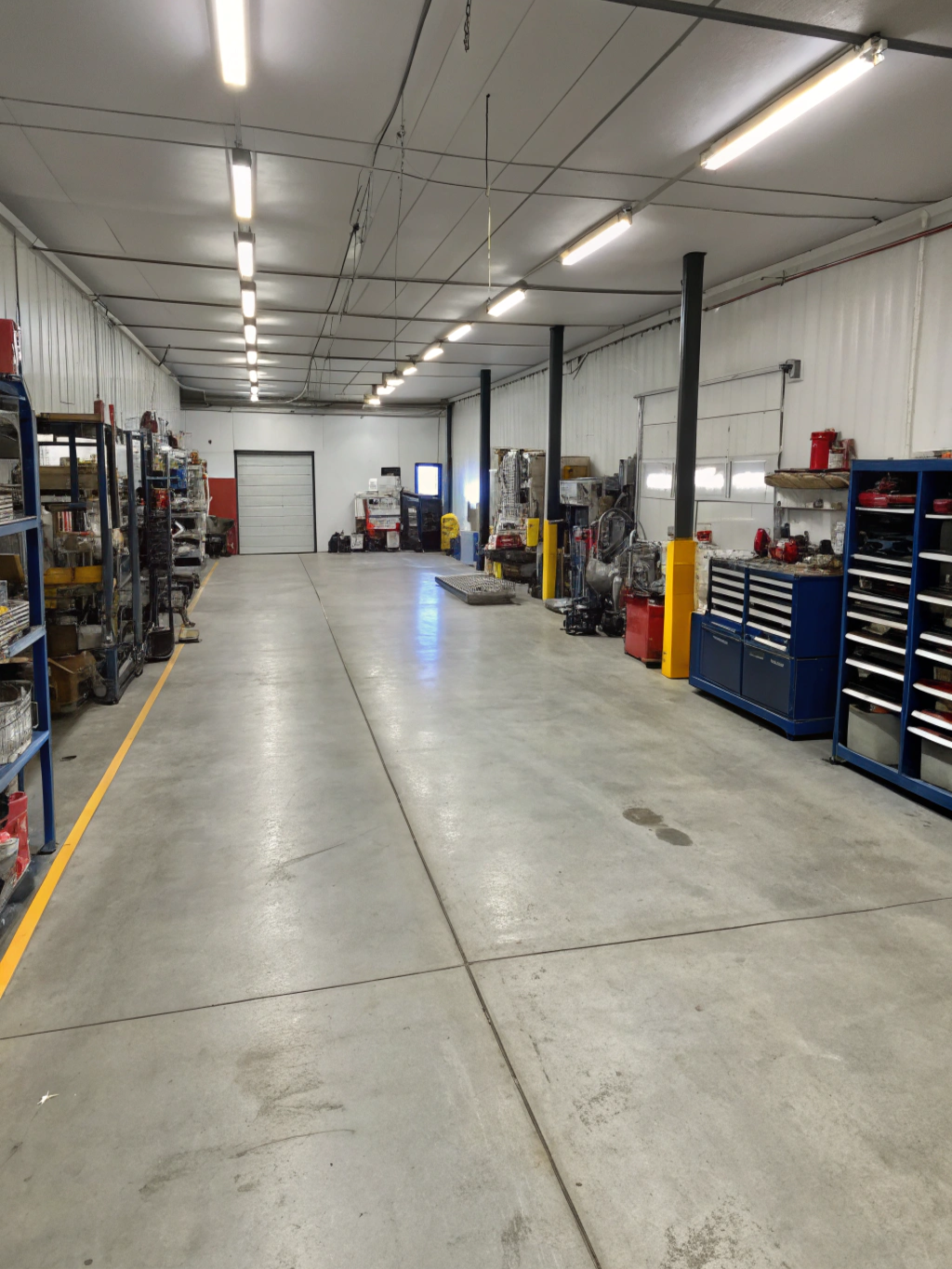
Used by tradies or home mechanics who carry heavier and more varied loads — vehicles, equipment, storage racking, and machinery — and require a heavier specification slab than a standard residential pour.
Take the specification up again, often requiring engineer-designed slabs with heavier reinforcement to handle the combined load of multiple vehicles, trailers, or plant equipment stored and moved across the floor regularly.
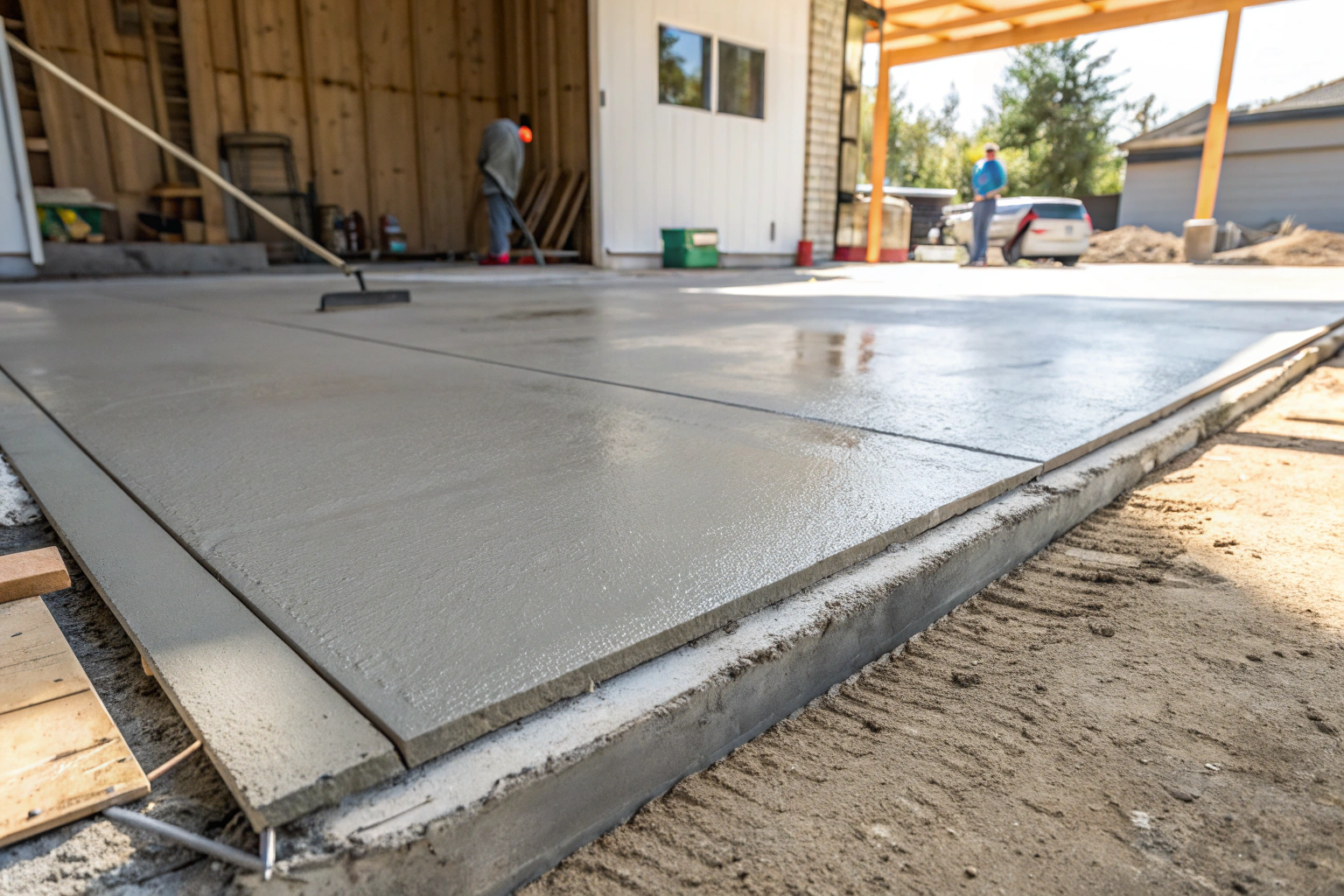
Residential vs Tradie-Grade Garage Slabs — Getting the Spec Right
Not every garage slab is built the same — and it shouldn’t be. The right specification depends entirely on what’s going on top of it from day one.
| Residential Garage Slab | Tradie-Grade Garage Slab | |
|---|---|---|
| Primary Load | Passenger vehicles | Utes, vans, trailers, machinery |
| Typical Thickness | 100mm | 125mm–150mm |
| Reinforcement | SL72 or SL82 mesh | Heavy mesh or steel bar reinforcement |
| Surface Finish | Broom or steel trowel | Power float for a harder-wearing surface |
| Joint Placement | Standard grid | Engineered to manage heavier point loads |
| Sub-Base Prep | Compacted road base | Deeper compaction, possible engineer input |
The single biggest mistake we see is a tradie-grade application poured to a residential specification — either because the builder assumed standard would do, or because the slab was designed before the intended use was properly considered. Upgrading a slab after the fact isn’t an option. Getting the specification right before the pour is the only way to do it. We recommend the correct spec for each client’s specific situation from the first conversation.
Garage Slab Finishes — From Broom to Power Float
Garage slab finishes come down to the intended use of the space. A broom finish is the standard for most residential garage applications — it leaves a lightly textured surface that provides grip underfoot and under tyre, drains well, and holds up to everyday vehicle traffic without any fuss. It’s practical, clean, and suits the majority of single and double-garage builds across the Gold Coast.
For workshop garages and trade applications, a power-floated finish is worth considering. The power float process compresses and hardens the surface layer of the concrete, producing a smoother, denser finish that resists oil penetration, is easier to sweep clean, and holds up better under repeated heavy loads and the kind of foot traffic a working shed sees every day.
A steel trowel finish sits between the two — smoother than a broom but without the full hardness of a power float. It suits homeowners who want a cleaner-looking garage floor without committing to a full epoxy coating later down the track. We’ll recommend the right finish for how the space is actually going to be used.
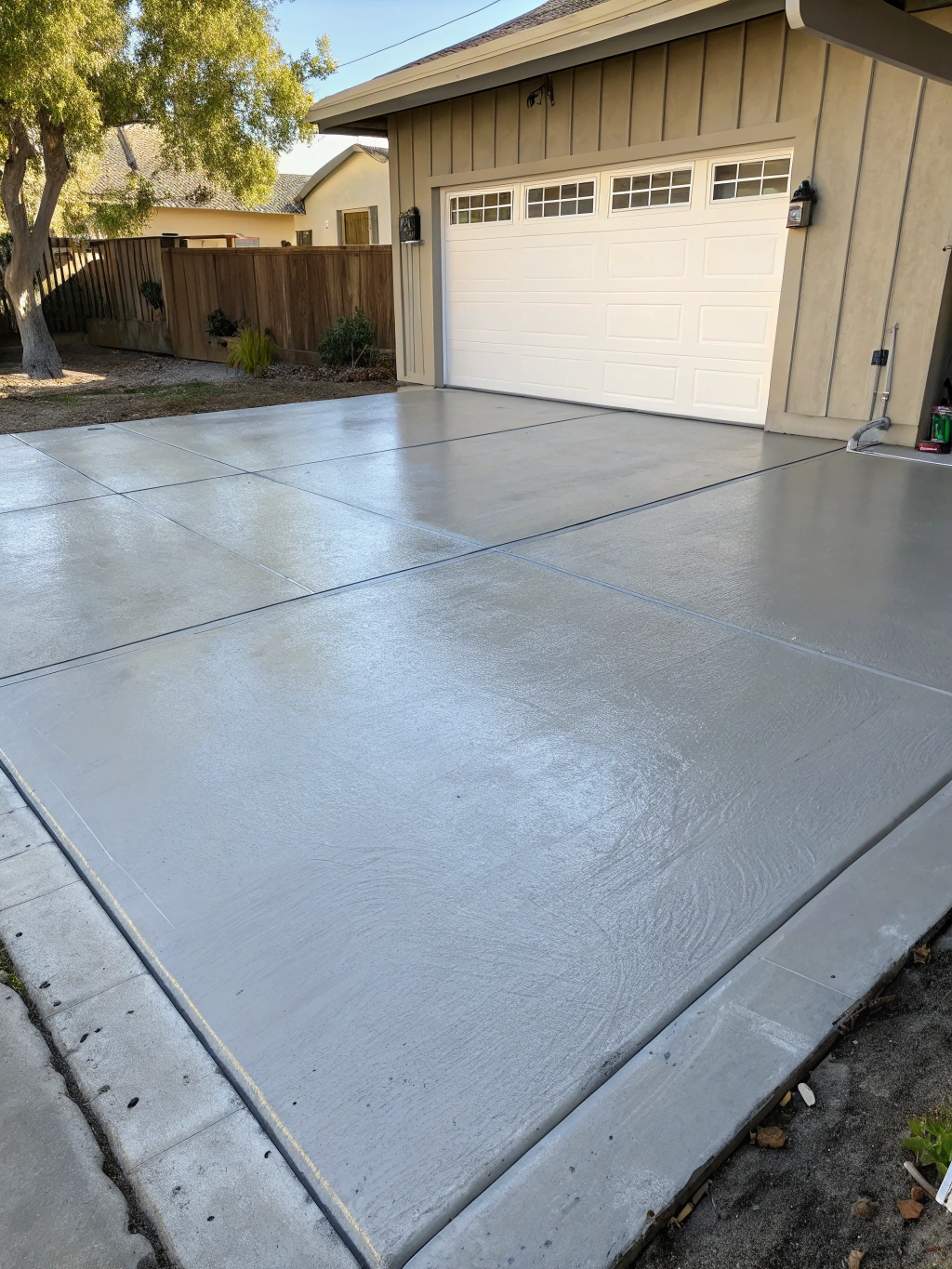
Drainage and Fall — Getting Water Out of Your Garage
Drainage and fall is one of the most overlooked elements of a garage slab — and one of the most important on the Gold Coast, where summer storm season brings heavy, fast-moving rainfall that finds its way into every poorly graded surface on a property.
A correctly designed garage slab sits at a slight gradient toward the door opening, directing water out of the garage naturally rather than letting it pool across the floor. It sounds straightforward, but getting the fall right requires the formwork to be set accurately from the start — because once the concrete is poured and cured, the gradient is locked in permanently.
A flat garage slab — or worse, one that falls toward the back wall — holds water against the base of the structure, creates ongoing moisture issues, and accelerates deterioration of anything stored at floor level. Tools, cabinetry, stored gear, and the base of wall frames all cope with the consequences of a slab that doesn’t drain properly.
We set the correct fall into every garage slab we pour, designed around the door position and site conditions from day one.


Replacing an Existing Garage Slab — Renovation and Upgrade Pours
Replacing an existing garage slab is one of the more common jobs we handle across the Gold Coast — and it’s almost always driven by the same set of problems. Cracking, settlement, a surface that’s deteriorated past the point of coating or repair, or an original slab that was simply poured too thin for how the garage is now being used.
The process starts with full demolition and removal of the existing slab. Once that’s out, we assess the sub-base condition, re-compact where needed, and start fresh with the correct specification for the application — not whatever the previous slab happened to be. This is also the right time to correct any drainage issues, adjust the fall toward the door opening, and factor in any changes to how the garage will be used going forward.
Renovation pours allow homeowners and tradies to upgrade the specification at the same time, moving from a light residential slab to a heavier tradie-grade pour if the use of the space has changed. Getting it right on the replacement means not having to do it a third time.
FAQ — Garage Slabs Gold Coast
A standard residential garage slab for passenger vehicles is typically 100mm thick. Tradie-grade applications carrying utes, trailers, or workshop equipment require 125mm to 150mm. The correct thickness depends on the intended use and should be specified before the pour.
Most residential garage slabs use SL72 or SL82 steel mesh reinforcement. Heavier applications require bar reinforcement or upgraded mesh to handle increased point loads. Reinforcement holds the slab together if minor cracking occurs and prevents small cracks from becoming structural failures.
Concrete reaches workable strength within 24 to 48 hours but takes 28 days to reach full structural strength. Vehicles should stay off the slab for at least seven days. Full curing time matters especially for workshop and tradie-grade slabs carrying heavier loads.
Minor surface cracks can be filled, but a structurally compromised garage slab cannot be patched back to full performance. A slab that has cracked due to inadequate thickness or reinforcement requires full demolition and replacement — not a surface repair.
Yes. A correctly designed garage slab sits at a slight gradient toward the door opening to direct water out during rain events. A flat or incorrectly graded slab holds water against the structure, causing moisture issues and accelerating deterioration of stored items and wall frames.
Get a Quote on Your Garage Slab — Gold Coast
A garage slab is not the place to cut corners on specification, and it’s not a decision to leave until the frame is already on site. The earlier we’re involved in the process, the better the outcome — for the slab design, the drainage, the reinforcement, and the finished surface your garage will sit on for decades.
We work with homeowners, tradies, and builders across the Gold Coast on single and double garages, detached workshop buildings, carport slabs, and multi-vehicle setups on lifestyle properties. Licensed, insured, and experienced across Gold Coast soil conditions. Get in touch today for an obligation-free quote.
