Skip to content

Concrete Demolition Gold Coast – Safe & Efficient Concrete Removal Services

Concrete demolition is one of those jobs that looks straightforward from the outside — until something goes wrong. A cracked slab running into the neighbour’s boundary. A jackhammer through a stormwater line. Broken concrete left sitting on site for weeks. These aren’t horror stories, they’re what happens when concrete removal gets treated like a simple knockdown rather than the skilled, planned operation it actually is.

On the Gold Coast, we work with homeowners, builders, and developers who need concrete removed properly — whether that’s an old driveway ahead of a new pour, a deteriorating slab before a renovation, sections broken out for plumbing or drainage access, or a full concrete structure cleared ahead of a knockdown-rebuild. The reason they call us isn’t just because we have the equipment. It’s because they’ve figured out that the quality of the demolition work directly shapes the success of everything that comes after it.

We’re Gold Coast’s concrete demolition specialists. Established suburbs like Southport, Nerang, Labrador, and Mudgeeraba are in our regular work area, and so is the broader Gold Coast residential and development market. Every project we take on gets the right method, the right equipment, and proper site management from start to cleared site — so the next stage of your project can begin without surprises.

What Types of Concrete Demolition We Handle
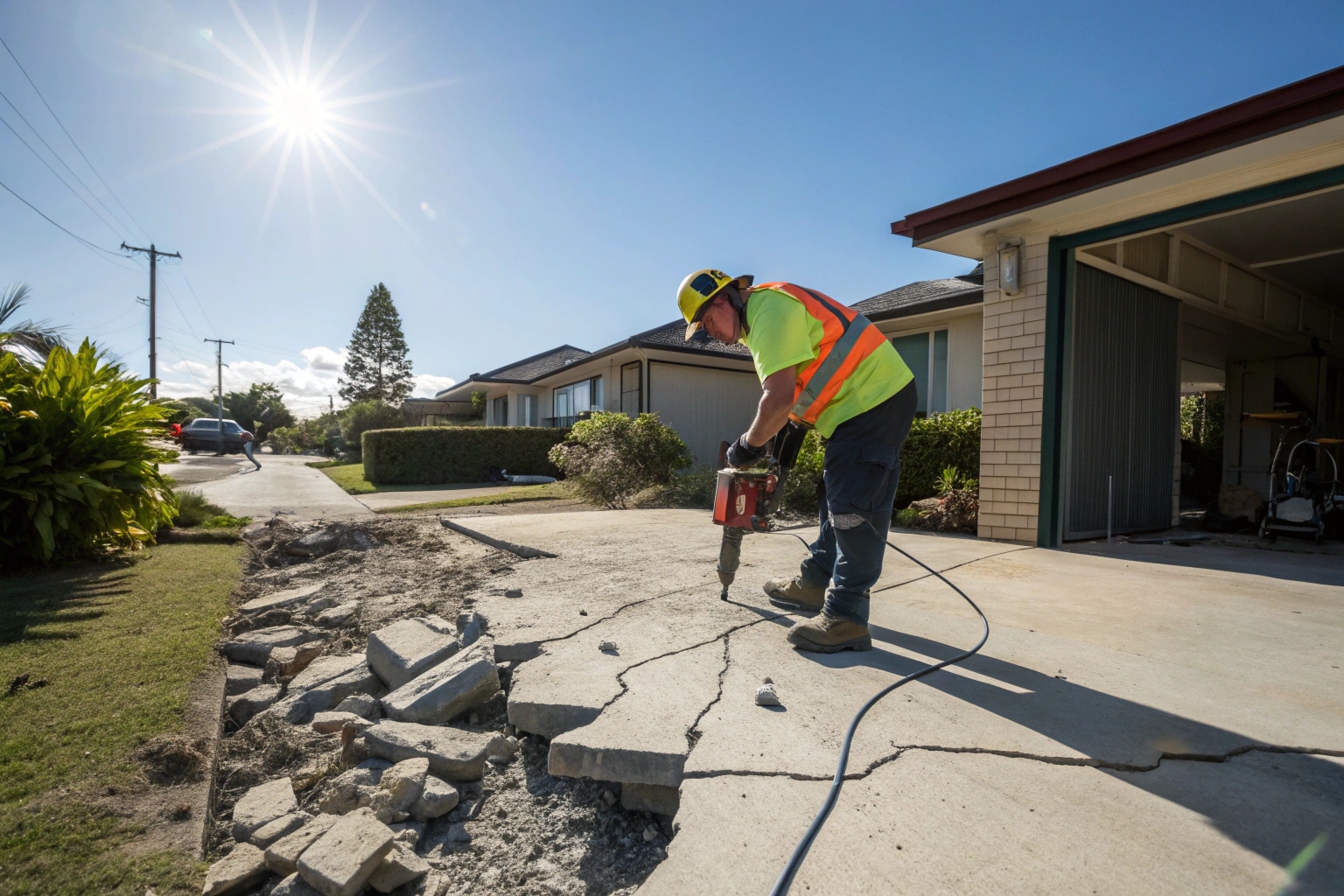
Concrete demolition contractor breaking up old driveway on Gold Coast residential property

Most concrete demolition projects on the Gold Coast fall into one of several categories — and each one has its own requirements when it comes to method, access, and site preparation.

Full Slab Demolition Removing an entire concrete slab — whether it’s a house pad, garage floor, or outdoor entertaining area — requires volume breaking equipment and a clear plan for spoil removal. Professional execution means the substrate is left clean, level, and ready for the next stage.

Driveway & Path Demolition Old concrete driveways and paths that have cracked, heaved, or simply reached the end of their service life need full removal before any new concrete can be poured. Getting the existing concrete out cleanly, without disturbing adjacent edging or landscaping, is where technique matters.

Retaining Wall Demolition Concrete retaining walls carry load from the soil behind them. Demolition needs to be staged correctly to manage that load and protect surrounding structures and garden beds during removal.

Concrete Structure Removal Sheds, footings, steps, and other concrete structures around the home require careful breaking and removal, particularly in established residential properties where access can be tight.

Breaking Out for Service Access Plumbers and drainage contractors regularly need sections of concrete broken out to access underground services. Controlled, targeted breaking that opens up exactly what’s needed — without wrecking the surrounding slab — keeps the rest of the project on track.

GET YOUR INSTANT FREE QUOTE NOW

    Newcastle Solar Power Google Reviews and Trust Badge

    Demolition Methods & Equipment We Use

    The right demolition method depends on the job — and choosing the wrong one costs time, creates extra mess, and can damage work that was supposed to stay intact. Here’s how we approach method selection on Gold Coast projects.

    Concrete Sawing
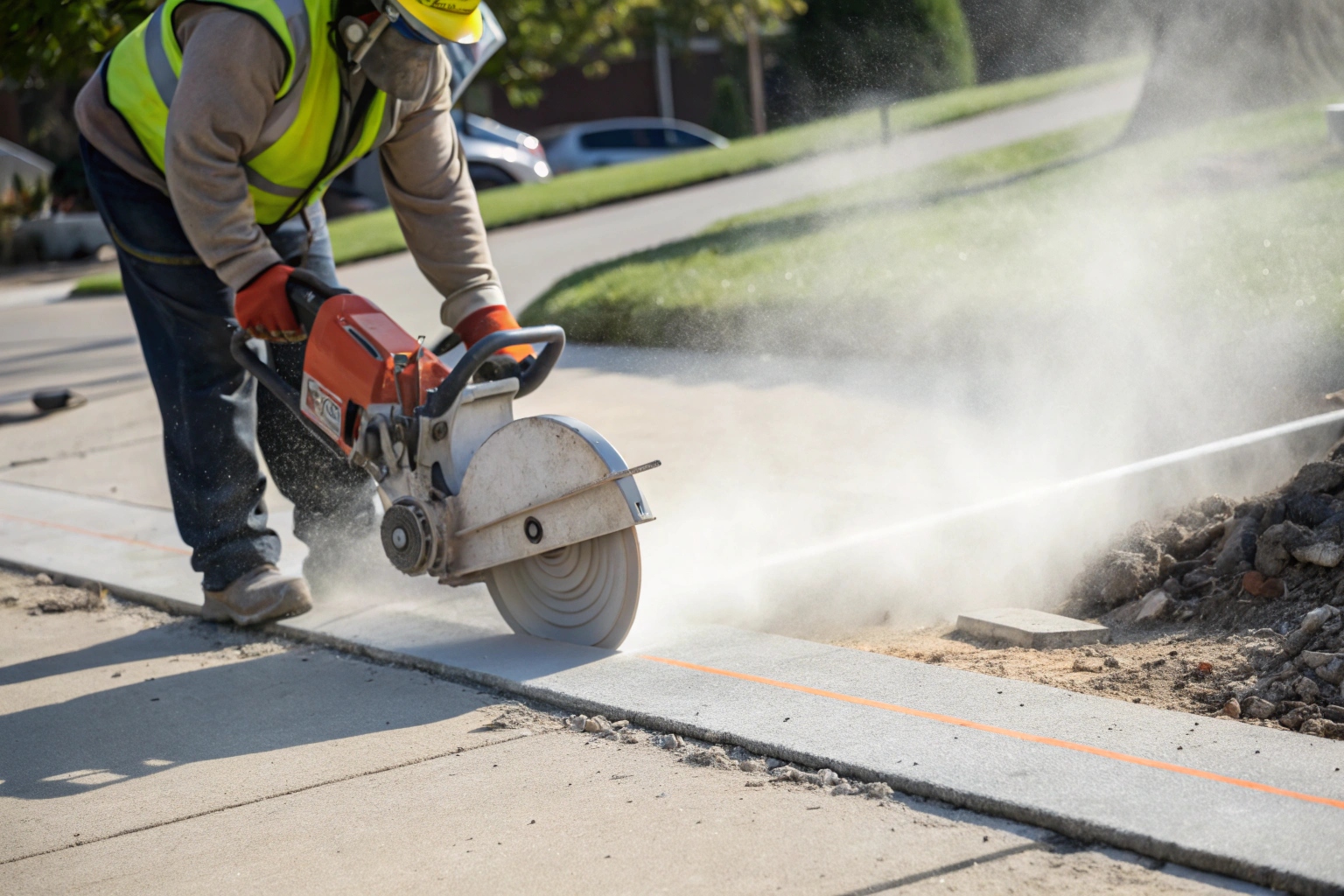
    Where a clean, straight line is needed — cutting a section of driveway for a new crossover, opening up a slab for drainage access, or separating a section of path being removed from the section staying in place — concrete sawing comes first. Saw cutting to clean lines before any breaking begins is what stops cracks running through adjacent concrete that’s being retained.

    Hydraulic Breaking & Jackhammering
    For full demolition of slabs, driveways, paths, and smaller structures, hydraulic breakers and jackhammers get the concrete broken into manageable sections for removal. Method selection at this stage depends on concrete thickness, reinforcement, and how much space there is to work in.

    Bobcat & Excavator Mounted Breakers
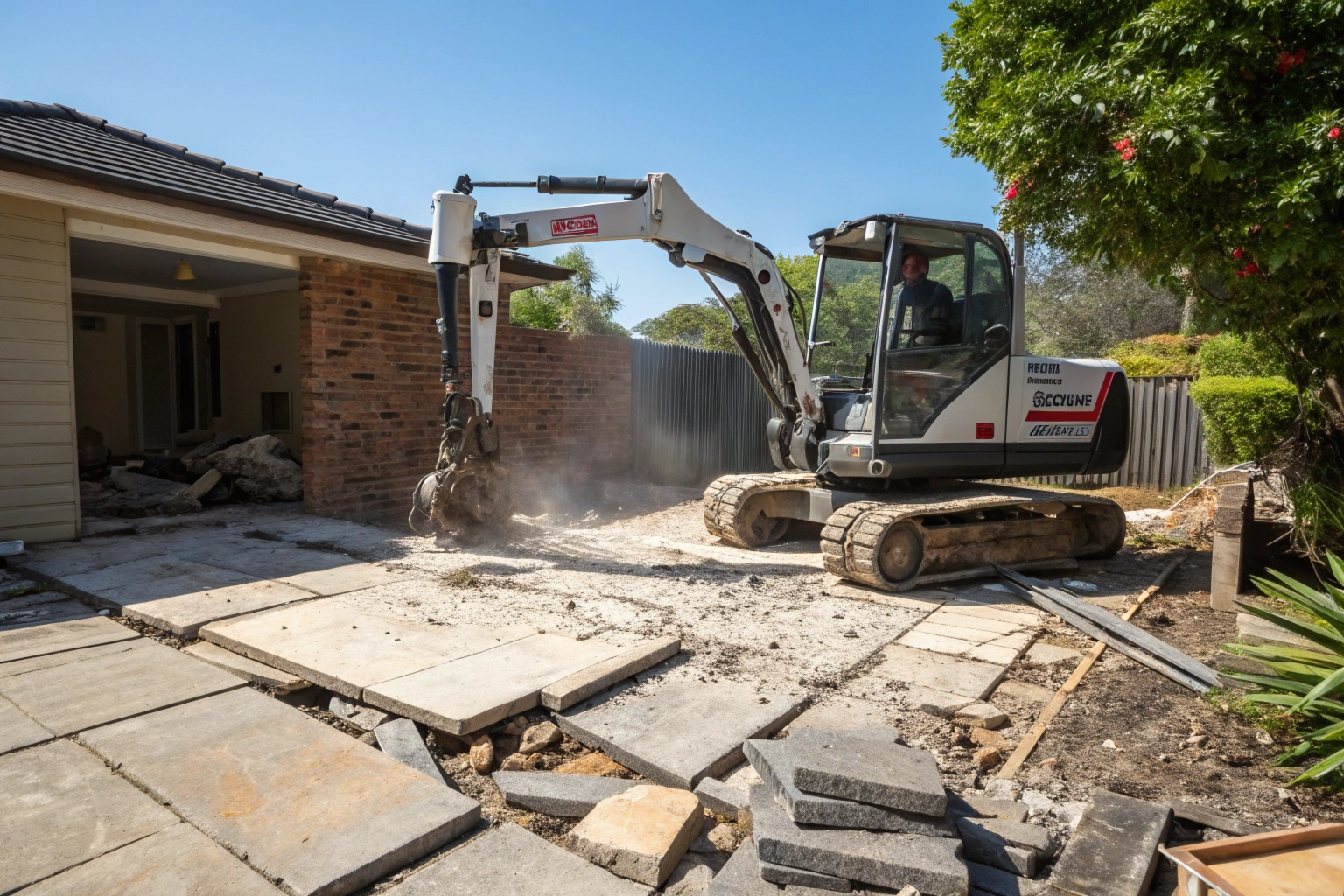
    Larger volume work — full slab demolition, concrete structure removal, knockdown-rebuild site clearing — calls for machine-mounted hydraulic breakers. These move significantly more material in less time and reduce the manual labour required on bigger jobs.

    Manual Breaking
    Confined areas, access-restricted sites, and work close to existing structures sometimes require manual breaking tools where machinery simply can’t fit or operate safely. We carry the gear to handle these situations without holding the project up.

    Method selection on every job accounts for site access, proximity to structures and services, concrete thickness, and whether clean edges are needed for new concrete going in alongside existing work.

    Site Safety & Service Location

    Before any breaking starts on a Gold Coast concrete demolition project, the ground underneath needs to be understood. Underground services — water mains, sewer lines, stormwater drainage, gas lines, and electrical conduits — run beneath most residential and commercial sites across the region. Hit one of those with a jackhammer or excavator bucket and the project stops immediately, costs escalate, and depending on what gets struck, the situation can turn dangerous fast.

    Contacting Dial Before You Dig before any concrete demolition or excavation work begins isn’t optional — it’s a mandatory requirement. We follow correct service location procedures on every project, without exception. That means underground services are identified and marked before a single tool goes into the ground.

    Beyond service location, site safety on concrete demolition jobs covers several other areas that don’t always get the attention they should:

    Structural assessment before demolition — retaining walls and structural slabs need to be assessed for load before breaking begins, so the sequence of removal is managed correctly
    Protection of surrounding structures — vibration from breaking can affect adjacent footings, walls, and paving; managing the work method and sequencing protects what’s staying in place
    Dust and debris management — concrete breaking generates significant dust and flying fragments; appropriate controls protect both the site team and neighbouring properties
    Secure site boundaries — particularly on residential projects where children and other trades may be present during works

    Every one of our concrete demolition projects is managed with a licensed and fully insured team. The site gets handed back cleared, safe, and ready for what’s coming next.

    Bobcat excavator removing concrete slab during demolition project on the Gold Coast
    Concrete saw cutting clean lines through driveway for partial concrete removal Gold Coast

    Concrete Waste Disposal & Recycling

    Concrete demolition generates a lot of material. A standard residential driveway removal can produce several tonnes of broken concrete, and a full slab demolition produces considerably more. What happens to that material after it leaves the site matters — both from an environmental standpoint and a council compliance perspective.

    On Gold Coast projects, skip bin placement and waste transport are subject to local council requirements. Disposal through unlicensed channels isn’t just environmentally irresponsible — it can create compliance issues for the property owner and the contractor. We manage all concrete waste disposal through licensed waste facilities, so there’s a clear and documented chain of responsibility from site to disposal.

    The good news is that concrete rubble is one of the more recyclable construction waste streams available. Broken concrete is widely processed into crushed aggregate used in road base, drainage applications, and fill materials. Rather than going straight to landfill, the bulk of concrete demolition material from our projects gets directed toward recycling facilities where it re-enters the construction supply chain as a usable product.

    What this means practically for homeowners and builders on the Gold Coast:

    All concrete waste is removed from site as part of our demolition service — you’re not left with a pile of rubble to organise separately
    Disposal is handled through licensed facilities that meet council and environmental requirements
    Recycling is prioritised where the material and facility access allows
    Documentation is available where builders and developers need records of compliant disposal for project files

    The site gets cleared. The waste gets handled properly. That’s part of the service.

    Partial Demolition & Concrete Modification

    Not every concrete demolition job involves removing everything on site. A significant portion of the work we do on the Gold Coast involves taking out only a section of existing concrete — and that’s where the technical requirements actually get more demanding, not less.

    When only part of the concrete is being removed, the concrete that’s staying needs to come through the process undamaged. That’s where a lot of DIY attempts and under-equipped operators create problems. Breaking into a slab without saw cutting the boundary first almost always results in cracking running beyond the intended removal zone — and now there’s more concrete to repair or replace than the original scope required.

    Common partial demolition scenarios we handle across Gold Coast residential and commercial projects include:

    New crossover installation — cutting out a section of existing driveway or kerb to create a new vehicle entry point, with clean saw-cut edges where the new concrete will tie in
    Plumbing & drainage access — breaking out defined sections of slab or path to allow plumbers and drainage contractors to access or install underground services, then reinstating the surface
    Landscaping modifications — removing sections of existing path or paving to allow new garden beds, retaining structures, or irrigation works
    Driveway widening — extending an existing driveway footprint where the original width no longer suits the property’s requirements

    The process is consistent across all of these: saw cut to clean lines first, then break and remove within those lines. The adjacent concrete that’s being retained stays intact, the edges are clean for any new work going in, and the finished result looks deliberate rather than patched.

    From Demolition Through to Finished Pour

    One of the more practical advantages of working with a concrete specialist for demolition work — rather than a general demolition contractor — is continuity across the full project scope.

    When a separate demolition crew knocks out the old concrete and a different concrete contractor comes in to pour the new work, there’s a handover point where accountability gets blurry. The new contractor inherits a site they didn’t prepare. If the substrate isn’t right, the base isn’t compacted correctly, or the levels aren’t where they need to be, the conversation about who’s responsible for fixing it tends to be an uncomfortable one.

    We handle both sides of that equation. The demolition gets done with the new concrete work in mind — because we’re the ones doing it. That means:

    Base preparation is done to our own pour standards — not to the minimum required to hand the site over to someone else
    Levels and grades are set during demolition with the finished concrete surface in mind, reducing rework at the installation stage
    Reinforcement and edge form requirements are factored in from the start, so the cleared site is genuinely ready for the next stage
    One point of contact manages the project from existing concrete removal through to finished pour — no gaps in accountability, no miscommunication between trades

    For homeowners replacing a driveway, renovating an outdoor entertaining area, or upgrading a pool surround, this end-to-end approach means the project moves from demolition to new concrete without delays or surprises sitting between the two stages.

    Frequently Asked Questions About Concrete Demolition on the Gold Coast

    Most residential concrete demolition jobs — a driveway, a slab, or a section of path — are completed within a day. Larger volumes, confined access, or projects requiring careful partial removal may take longer. We’ll give you a realistic timeframe when we quote.

    For most standard residential concrete removal, no permit is required. However, certain demolition work — particularly involving structures or work close to boundaries — may require council notification. We’ll flag this during the quoting stage if it applies to your project.

    Yes. Confined access is something we plan for. Between manual breaking equipment and smaller machinery, most access-restricted residential sites can be managed without issue.

    All broken concrete is removed from site and directed to licensed waste facilities. The bulk of it gets recycled as crushed aggregate rather than going to landfill.

    Yes — and that’s often the most practical approach. We manage the full scope from removal through to finished pour, with no handover gap between trades.

    Ready to Get Your Concrete Demolition Underway?

    Whether you’re a homeowner clearing an old driveway before a replacement pour, a builder preparing a site for new construction, or a developer clearing concrete ahead of a knockdown-rebuild, we’re the Gold Coast concrete demolition team that gets the job done properly.

    Licensed, insured, and experienced across every concrete demolition type and project scale — from small residential section removals through to full slab and structure clearances.

    Get in touch today for a free quote on your Gold Coast concrete demolition project.

    GET YOUR INSTANT FREE QUOTE NOW

      Newcastle Solar Power Google Reviews and Trust Badge

      Your Local Concrete Company in Gold Coast

      Back To Top CALL US NOW