Skip to content

Concrete Foundations Gold Coast – Engineered Foundations Built to Specification

Every building on the Gold Coast tells a story above ground. The design, the finishes, the way it sits in the landscape. But the story that actually matters? That’s the one happening underground. Because no matter how well a home or commercial building is designed and built above the slab, its long-term performance comes down to what’s below it.

A correctly engineered concrete foundation is what transfers structural loads safely into the ground. It resists movement from reactive soils, handles the moisture variation that Gold Coast’s wet and dry seasons dish out year after year, and delivers the stable platform every building needs to perform as designed — not just for five years, but for the full life of the structure.

Get it right and you won’t think about your foundation again. Get it wrong and you’ll be dealing with cracking, door frames that won’t close, and repair costs that dwarf what the fix would’ve cost at the start.

We’re Gold Coast’s concrete foundation specialists, working across the full region — from new house slabs in the growth corridor suburbs of Pimpama, Upper Coomera and Ormeau, through to commercial and industrial foundation work in Yatala and Stapylton, and infill residential projects right across the established coastal suburbs. We build foundations to engineer specification, to site classification, and to Australian Standards — bringing the technical knowledge and on-site precision that this most critical part of any construction project demands.

The Types of Concrete Foundations We Build
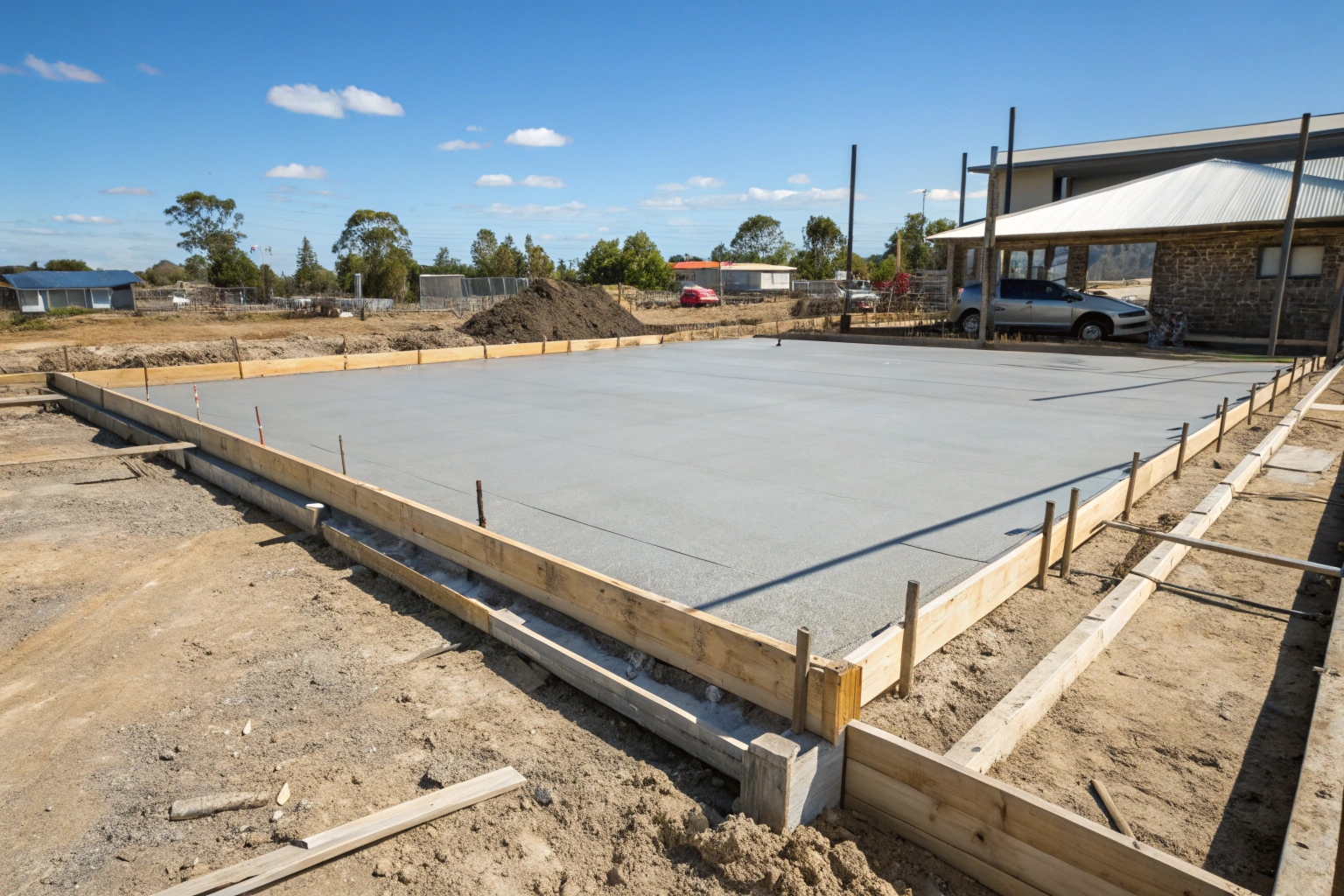
Freshly poured residential concrete foundation slab on a Gold Coast construction site

Not every building needs the same foundation. The right system depends on your soil classification, structural loads, building design, and what’s sitting above it. Here’s what we construct across the Gold Coast region.

Slab-on-Ground Foundations
The most common foundation type for residential and commercial construction across Queensland. A reinforced concrete slab is poured directly onto prepared ground, acting as both the structural foundation and the finished floor base. Suited to flat and gently sloping sites where soil conditions support direct bearing.

Strip Footing Foundations
Continuous reinforced concrete footings that run beneath load-bearing masonry walls, distributing wall loads across a wider soil contact area. The standard foundation system for brick and block wall construction in residential and commercial applications.

Pad and Pier Foundation Systems
Isolated concrete pads or drilled piers that support individual structural columns or posts. Used for elevated structures, post-frame buildings, decks, and where soil conditions or site slope make slab-on-ground construction impractical or uneconomical.

Combined Foundation Systems
Some projects require a combination of foundation types within the one structure — for example, a slab-on-ground with integrated pad footings for steel columns, or strip footings combined with pier supports for stepped site levels. We work from engineer drawings to construct combined systems on more complex residential and commercial projects where a single foundation type alone won’t meet the structural brief.

GET YOUR INSTANT FREE QUOTE NOW

    Newcastle Solar Power Google Reviews and Trust Badge

    How We Build Concrete Foundations — From Site Assessment to Final Pour

    Foundation construction isn’t a single event. It’s a staged process where every step has to be done correctly before the next one begins. Cut corners anywhere in the sequence and you compromise everything above it.

    Here’s how we manage foundation projects from the ground up.

    Geotechnical Assessment and Soil Classification

    Before any design work starts, the site needs to be assessed and classified under AS 2870 — the Australian Standard governing residential slab and footing design. The classification determines the foundation design, reinforcement schedule, depth, and beam spacing. We work from the geotechnical report and engineer-provided design calibrated to your specific site.

    Site Preparation, Excavation and Sub-Base Compaction

    Once design is confirmed, the site is excavated to the required depth and profile, sub-base material is placed and compacted to specification, and the formation is prepared to receive formwork.

    Formwork, Reinforcement and Concrete Pour

    Formwork is set to the engineer’s dimensions and levels. Reinforcement steel is placed strictly to the engineer’s schedule — bar sizes, spacing, cover, and lapping are all checked before any concrete goes in. Concrete is poured at the specified mix strength, finished, and cured correctly to achieve full design strength.

    Certifier Inspection and Hold Points

    In Queensland, a mandatory certifier inspection of reinforcement is required before concrete placement. We manage the inspection programme to keep your project on schedule without hold point delays — so there’s no waiting around once the steel is in.

    Commercial and Industrial Foundation Work on the Gold Coast

    Residential foundations carry significant structural responsibility. Commercial and industrial foundations carry a whole lot more.

    Higher floor loadings, heavy equipment, dynamic loads from operating machinery, concentrated point loads from structural steel columns — these all place demands on a foundation system that go well beyond what a standard residential slab is designed to handle. The engineering behind a commercial or industrial foundation reflects that. Slab thickness, reinforcement density, concrete mix design, sub-base specification, and joint layout are all determined by the structural engineer based on the specific loading conditions of each facility.

    We work from structural engineering drawings on commercial and industrial foundation projects across the Gold Coast and broader Southeast Queensland region. That includes tilt-panel industrial buildings and warehouses in the Yatala and Stapylton enterprise corridors, commercial construction across the Gold Coast’s established business precincts, and mixed-use and multi-residential foundation work in growth areas through the northern corridor.

    What Commercial Foundation Work Involves

    Engineer drawing compliance — every pour is executed to the structural engineering package, not interpreted or approximated
    Higher specification concrete mixes — commercial applications routinely require 32MPa, 40MPa or higher depending on loading
    Thickened edge beams and isolated pads — for column bases and point load transfer where standard slab sections aren’t sufficient
    Joint and crack control layout — designed to manage shrinkage and thermal movement across large slab areas
    Programme coordination — working within commercial construction schedules where foundation delays have real downstream cost consequences

    If you’re a builder or developer with a commercial foundation requirement on the Gold Coast, talk to us early in the programme.

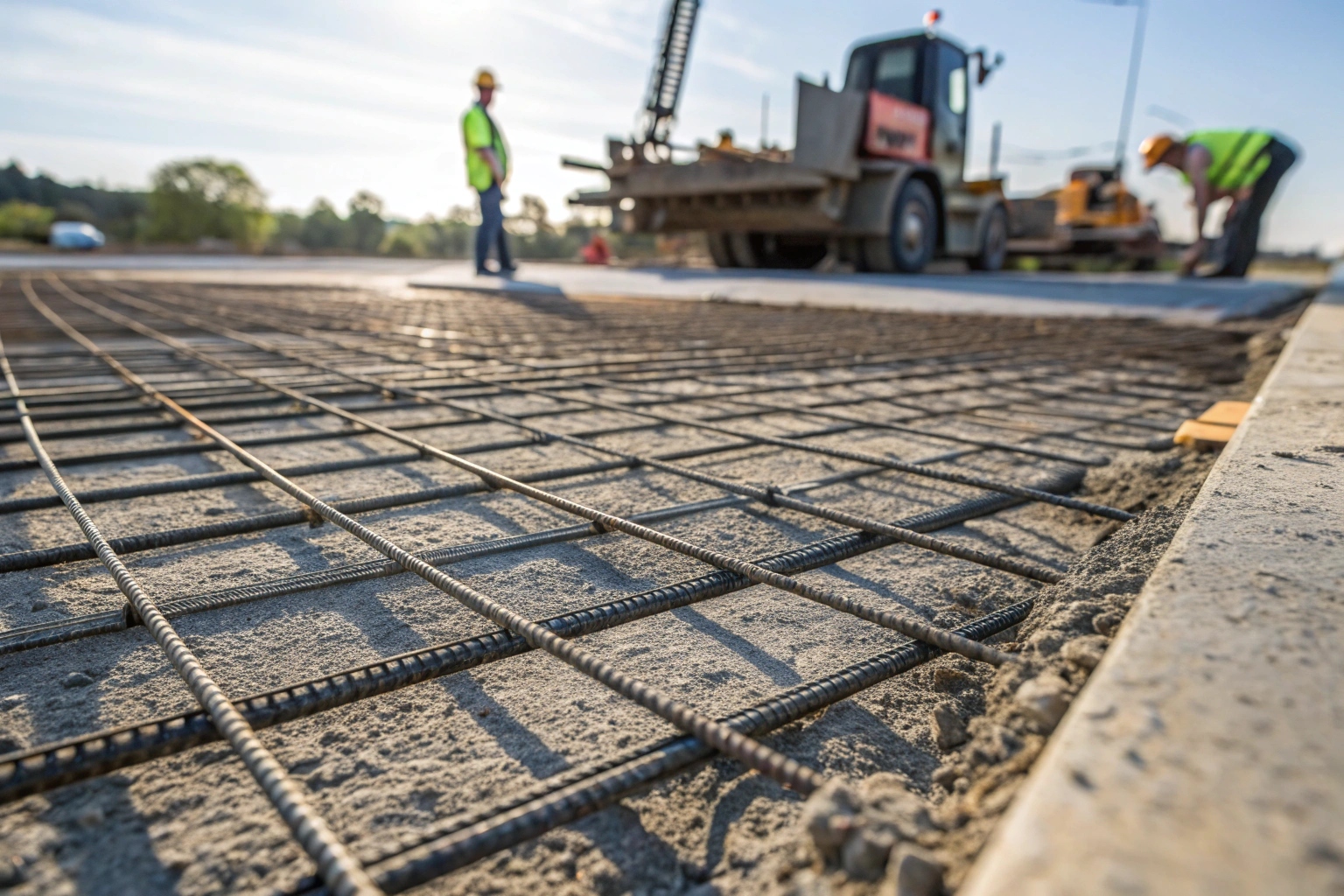
    Steel reinforcement mesh laid on sub-base before concrete foundation pour
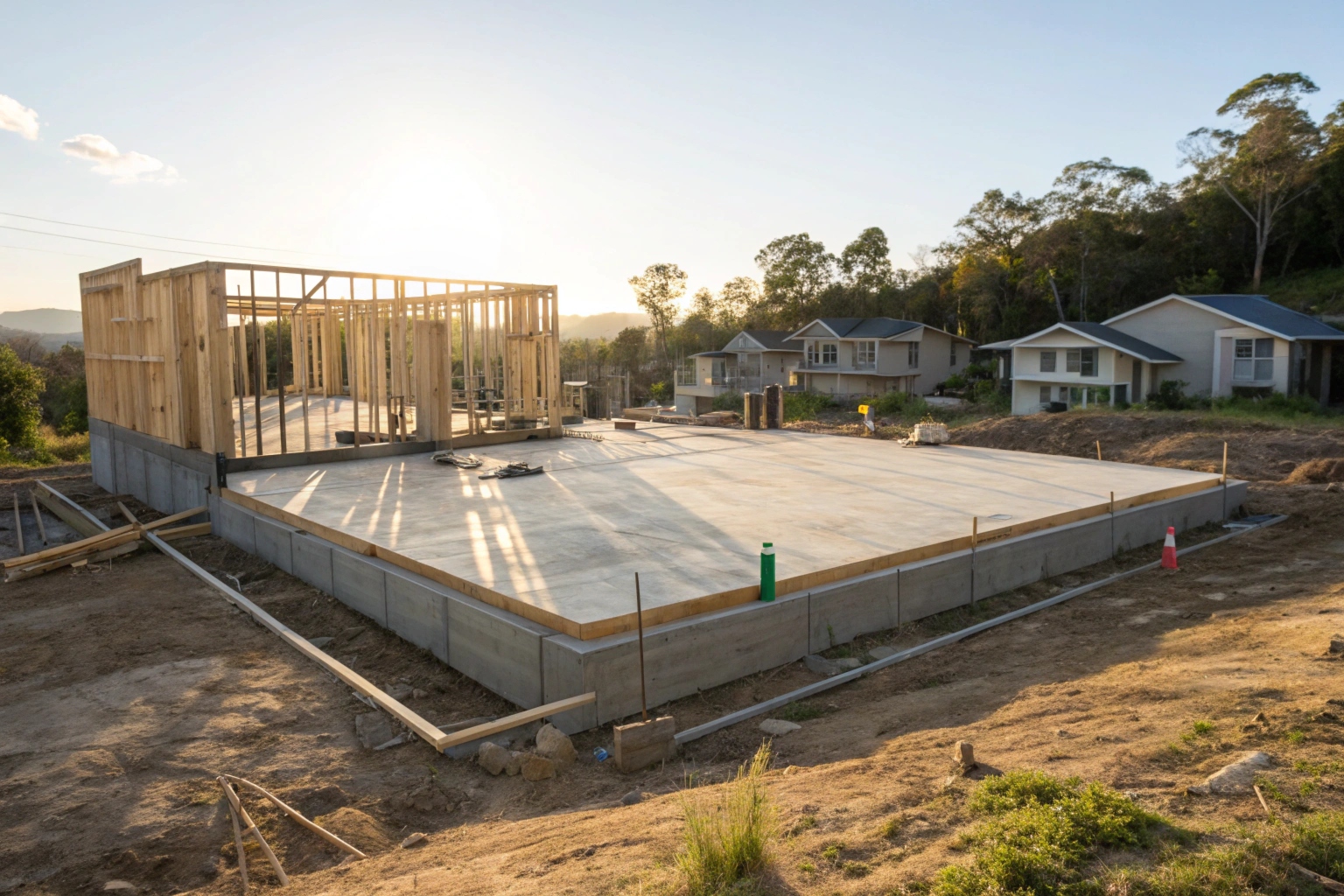
    New home under construction on Gold Coast concrete slab foundation

    Site Classification and What It Means for Your Foundation on the Gold Coast

    This is the part that catches a lot of people off guard — and it’s the part that matters most when it comes to foundation design.

    Under AS 2870, every residential site in Australia is assigned a classification based on soil reactivity. That classification directly determines how your foundation is designed — the depth, the beam spacing, the reinforcement schedule, and the slab thickness. Get the classification wrong or ignore it entirely, and you’ve got a foundation that’s fighting the ground beneath it from day one.

    Gold Coast sites cover a wide range of classifications. Stable Class A sandy coastal soils are common in established beachside suburbs where conditions are relatively predictable. But move into the growth corridor — Pimpama, Ormeau, Upper Coomera, and parts of Nerang and Mudgeeraba — and you’re into a different situation entirely. These areas carry highly reactive Class H and Class P problem sites where the soil expands and contracts significantly with seasonal moisture changes.

    Queensland’s subtropical climate makes this worse than it sounds. The pronounced wet and dry seasonal cycle drives significant moisture variation in the soil profile throughout the year. Reactive soils respond to that variation by swelling when wet and shrinking when dry — and if the foundation isn’t designed to handle that movement through correct depth, reinforcement and beam spacing, the building above it will eventually show the consequences through cracking, distortion and structural damage.

    We work strictly from engineer-provided foundation designs calibrated to the specific site classification of each project. No guesswork, no one-size-fits-all slabs.

    What Happens When Foundations Are Inadequately Built

    It doesn’t always show up straight away. Sometimes it takes a season or two of wet and dry cycles before the ground starts doing what an undersized or under-engineered foundation can’t handle. But when it does show up, it shows up everywhere at once.

    Structural cracking through walls and floor slabs. Door and window frames that rack and distort until they won’t open and close properly. Slab heave in one area and settlement in another — sometimes within the same building. In more severe cases, the damage reaches a point where the only viable path forward is underpinning or full foundation replacement. Neither is cheap. Neither is quick. And neither is something any homeowner or builder wants to be dealing with on a property they thought was built to last.

    The hard truth is that most foundation failures aren’t accidents. They’re the result of inadequate design for the site classification, poor construction practice, insufficient reinforcement, or concrete placed without proper sub-base preparation and compaction. Problems that were entirely preventable at the construction stage.

    The cost of getting foundation construction right from the outset — proper geotechnical assessment, engineer-designed footings, correct reinforcement placement, and quality concrete at the right mix strength — is always a fraction of what rectification costs once the damage is done.

    We’ve seen what failed foundations do to buildings and to the people who own them. That’s exactly why we treat every foundation project, regardless of size, with the same level of technical attention and on-site discipline.

    Concrete Foundations Gold Coast — Frequently Asked Questions

    It depends on the size and complexity of the project. A standard residential slab can typically be formed, inspected, poured and finished within a few days once site preparation is complete. Larger or more complex commercial foundations take longer and are scheduled in stages. We’ll give you a clear programme timeline before work starts.

    For new residential construction, yes — a geotechnical report and engineer-designed footing system is required under Queensland building regulations. If you don’t have one yet, we can point you in the right direction early in the process so it doesn’t hold up your build schedule.

    It varies significantly across the region. Coastal and established suburb sites are often Class A or Class S. Growth corridor suburbs like Pimpama, Upper Coomera and Ormeau frequently carry Class H or Class P classifications due to highly reactive clay soils. Your geotechnical report will confirm the exact classification for your site.

    Absolutely. We work alongside builders, owner-builders, structural engineers and certifiers throughout the construction process. Clear communication at every stage is standard practice for us — not an afterthought.

    Residential slabs are typically poured at 25MPa or 32MPa depending on the engineer’s specification. Commercial applications often require higher strength mixes. We always pour to the engineer’s specified mix — not whatever happens to be available on the day.

    Ready to Get Your Gold Coast Foundation Built Right?

    Foundation work isn’t the place to shop on price alone. It’s the one part of your build you genuinely can’t afford to get wrong — because everything that goes up above it is only as good as what’s below it.

    We bring the technical knowledge, on-site discipline, and regional experience that concrete foundation work on the Gold Coast demands. Across all foundation types and site classifications. Across residential, owner-builder and commercial projects. Working to engineer specification, managing hold point inspections, and delivering foundations built to perform for the full life of the structure above them.

    Our team is fully licensed and insured, experienced across the full range of AS 2870 site classifications, and set up to work within residential and commercial construction programmes without causing downstream delays.

    What you get when you work with us:

    Foundation construction to engineer specification and Australian Standards
    Experience across Class A through to Class H and P reactive soil sites
    Reinforcement placement inspected and certified before every pour
    Commercial foundation capability from engineer drawings
    Clear communication with builders, engineers and certifiers throughout
    Licensed, insured and experienced across all Gold Coast regions

    Whether you’re a homeowner planning a new build, an owner-builder working through your construction programme, or a commercial builder with a foundation package to price — talk to us early. Getting us involved at the design and planning stage means your foundation requirements are correctly scoped, scheduled, and ready to go when the ground breaks.

    Call us today for a free quote on your Gold Coast concrete foundation project.

    GET YOUR INSTANT FREE QUOTE NOW

      Newcastle Solar Power Google Reviews and Trust Badge

      Your Local Concrete Company in Gold Coast

      Back To Top CALL US NOW